Momoyama Period 安土桃山時代 (16th/17th Century)
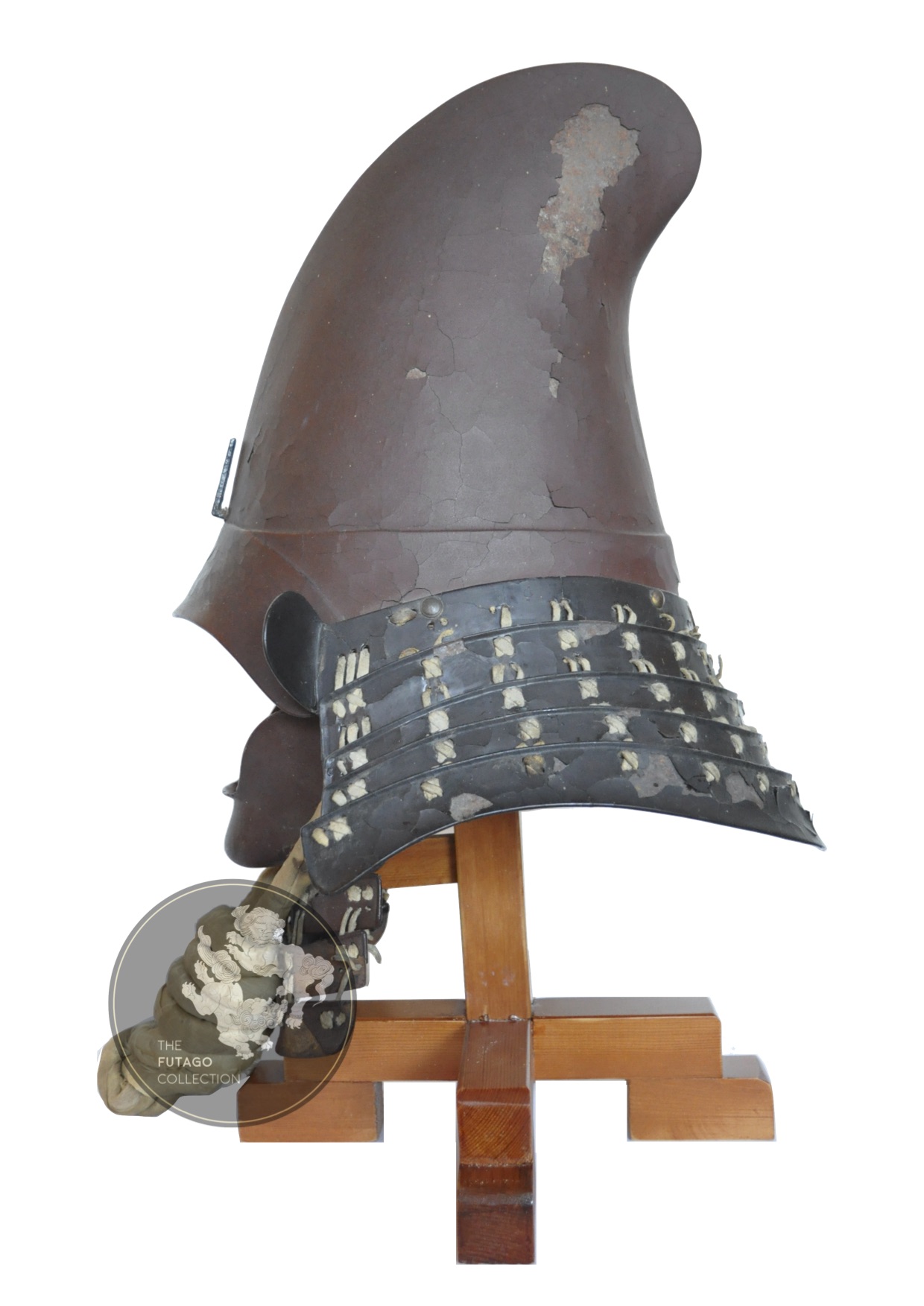
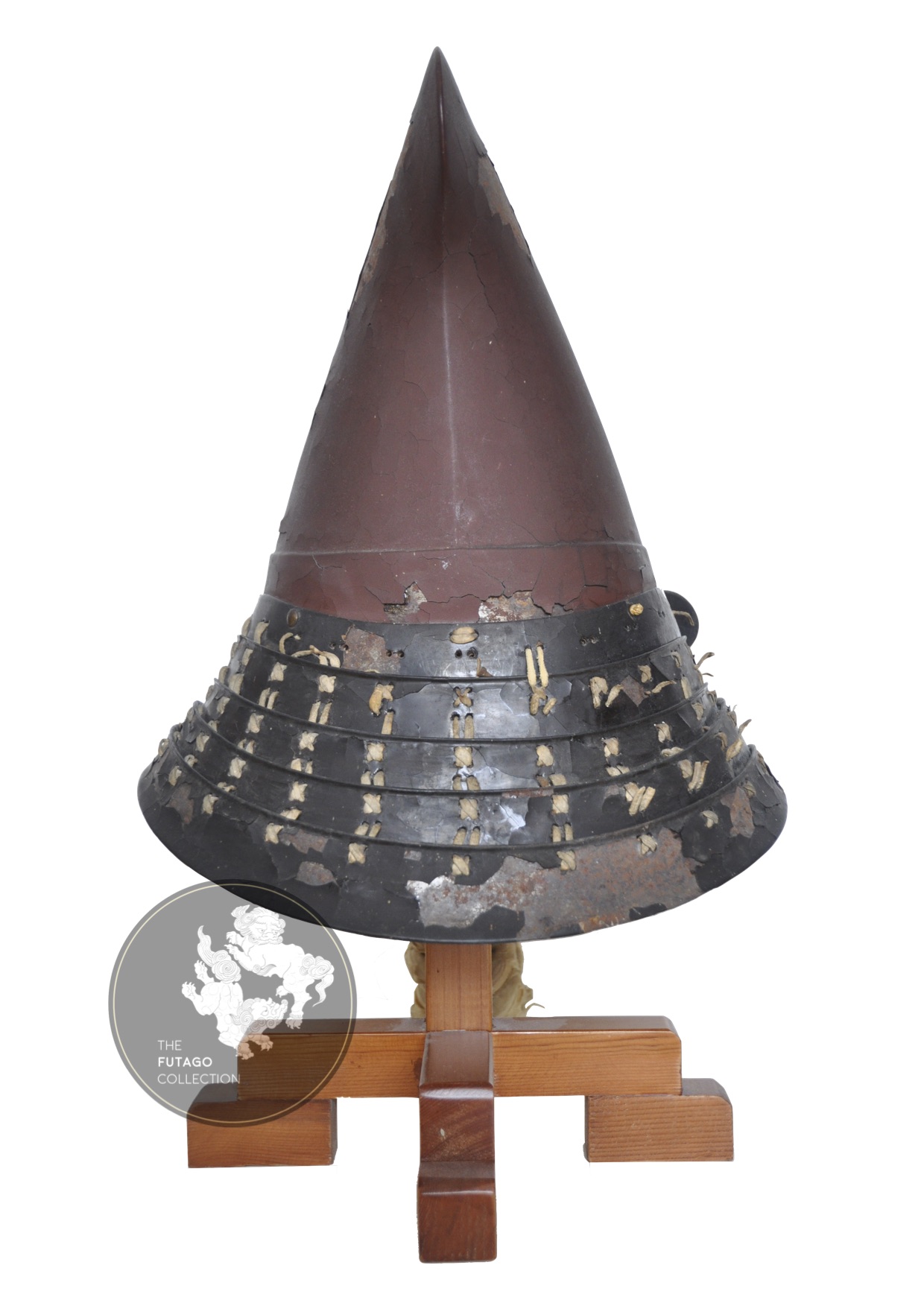
This early so-called Eboshi helmet is meant to reproduce the cap worn by Shinto priests. Of unusual shape, it is built of five iron riveted plates, covered with brownish-red Urushi lacquer.
“The eboshi kabuto is a form of „Kawari-Kabuto“(変わり兜) a family of helmets featuring fantastical designs. Many warriors favored this type of hat as it made them look larger and more formidable to the enemy.
The Eboshi Kabuto often consisted of a steel inner helmet on which the Ebōshi attachment made of leather or wood was placed and fastened. The leather or wood was lacquered with Urushi and often decorated with pictorial lacquer work. Other examples fully made of embossed iron.
Katō Kiyomasa (1562–1611) wore a famous Eboshi Kabuto, which can be seen on many paintings and monuments of his person. As a Maedate, he wore a sun and underneath a horizontal crescent moon.
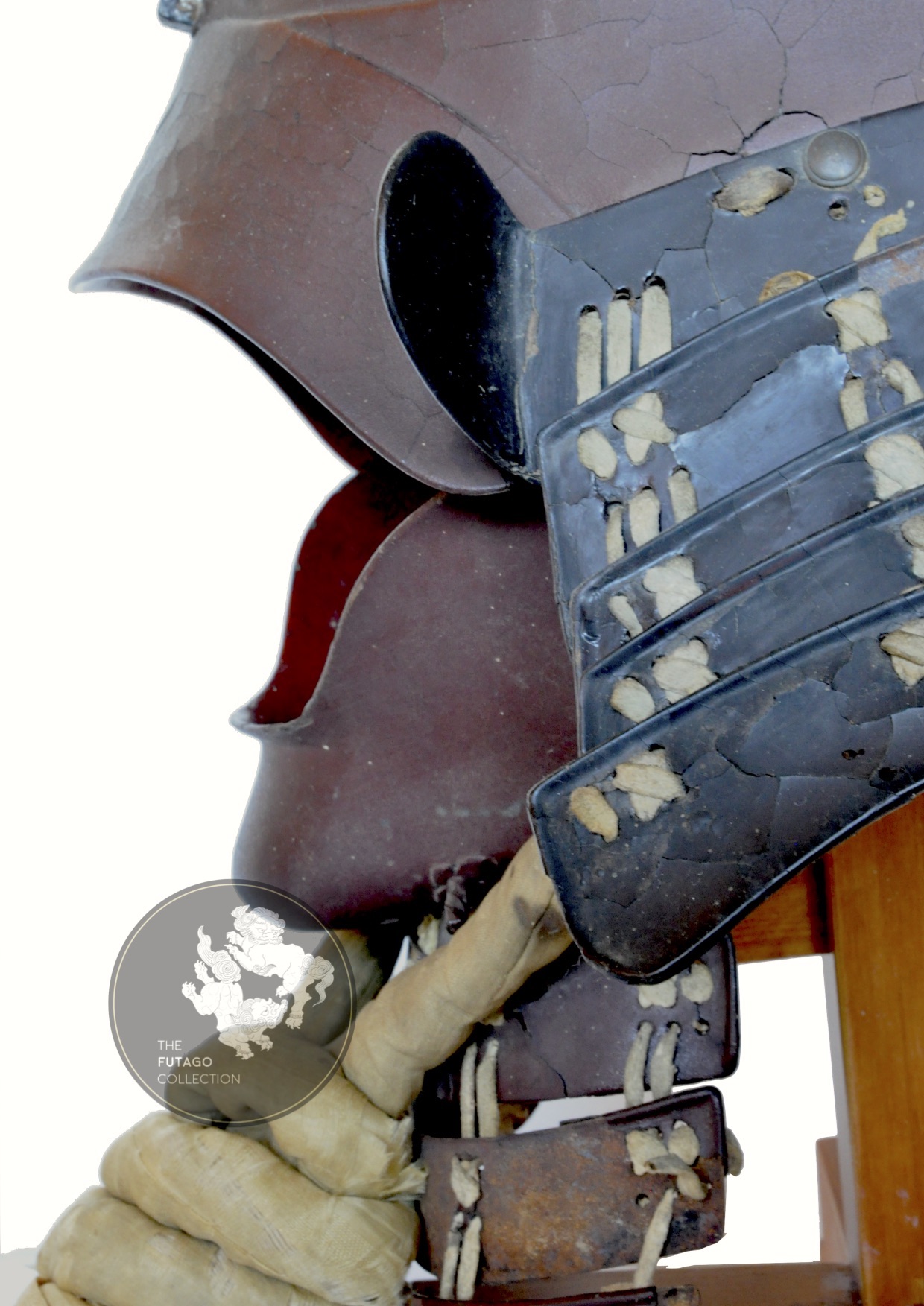
The Hanbó (半頬) is a Mengu (facial armor) that covers the chin and lower cheek area to protect the throat area.
This type of half mask was developed during the Nanboku-chō period (1336 ~ 1392). It replaced the Happuri, a type of an open face mask and would eventually lead to the Hoate then Menoshita-bô (目の下頬) or “Menpo“. During the Muromachi period (1336 ~ 1573), the hanbô respectively would be equipped with a Nodowa or Tate to protect the throat area.
During the late Muromachi period onward it became more popular to add a nose to the Mengu for some added protection. However, the Hanbo would remain popular on the battlefield, despite lacking protection for the nose, it was far more practical as it didn’t impede vision or breathing.
The Menpo was traditionally used, not only to protect the face in battle but to help hold the cords of the Kabuto (helmet) to the warrior’s head, while also providing protection from the Shinobi-no-o (Kabuto rope).





 THE FUTAGO COLLECTION