Momoyama period late 16th-century
桃山時代(十六世紀末期)
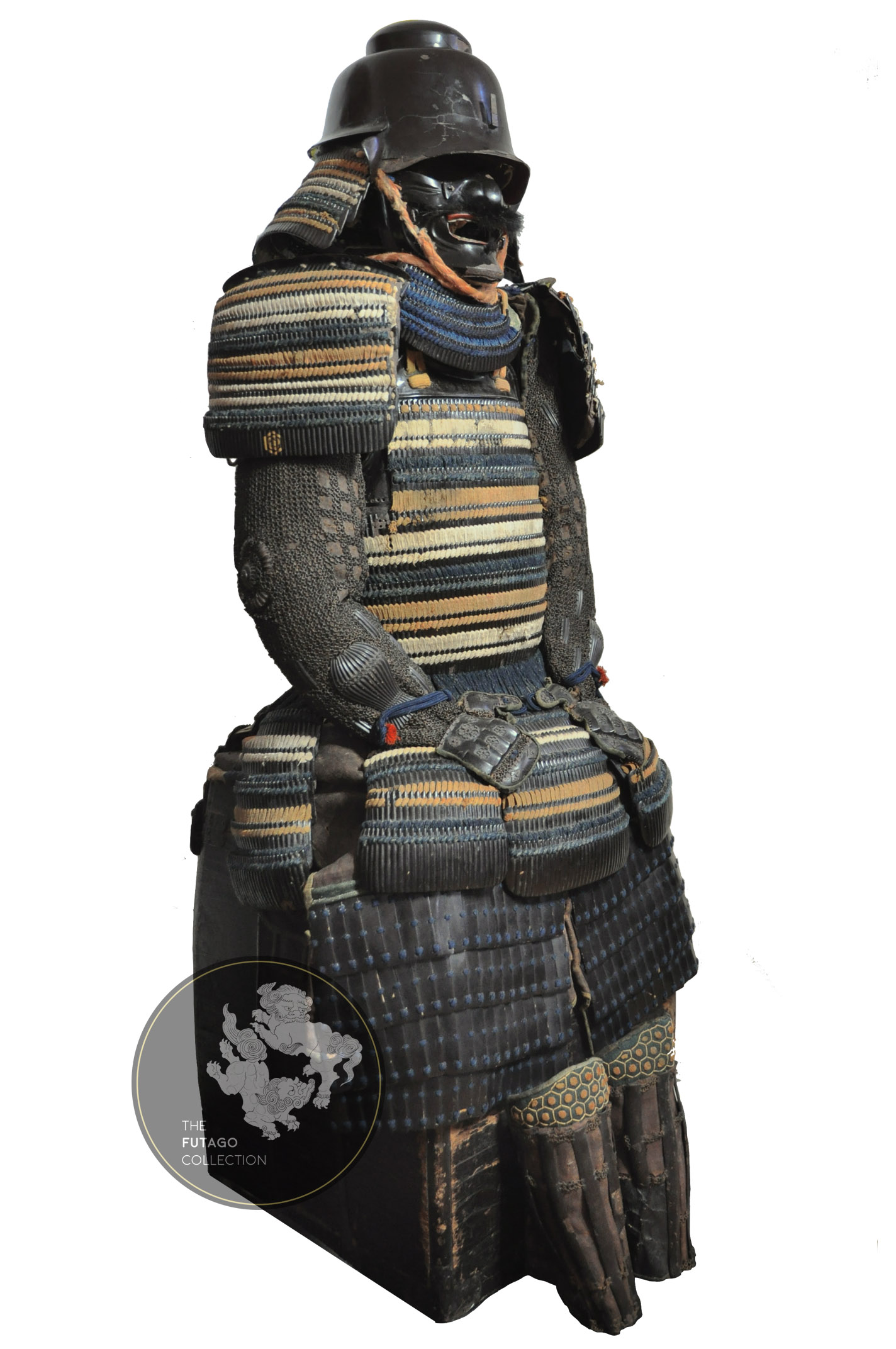
This important Oda Clan Armor from the second half of the 16th-century was part of a Swedish private collection and seems to be one of the pieces that were imported to Europe in the late 19th-century after Japan opened its gates to the west. Original English newspapers from 1890 were found inside the Hitsu Box.
織田氏一族が所有していたとされるこの甲冑はスウェーデンの個人が所蔵していたもので、19世紀終わりの明治維新を機にヨーロッパへ持ち込まれたと考えられています。具足櫃の中には1890年代の英字新聞が見つかっています。
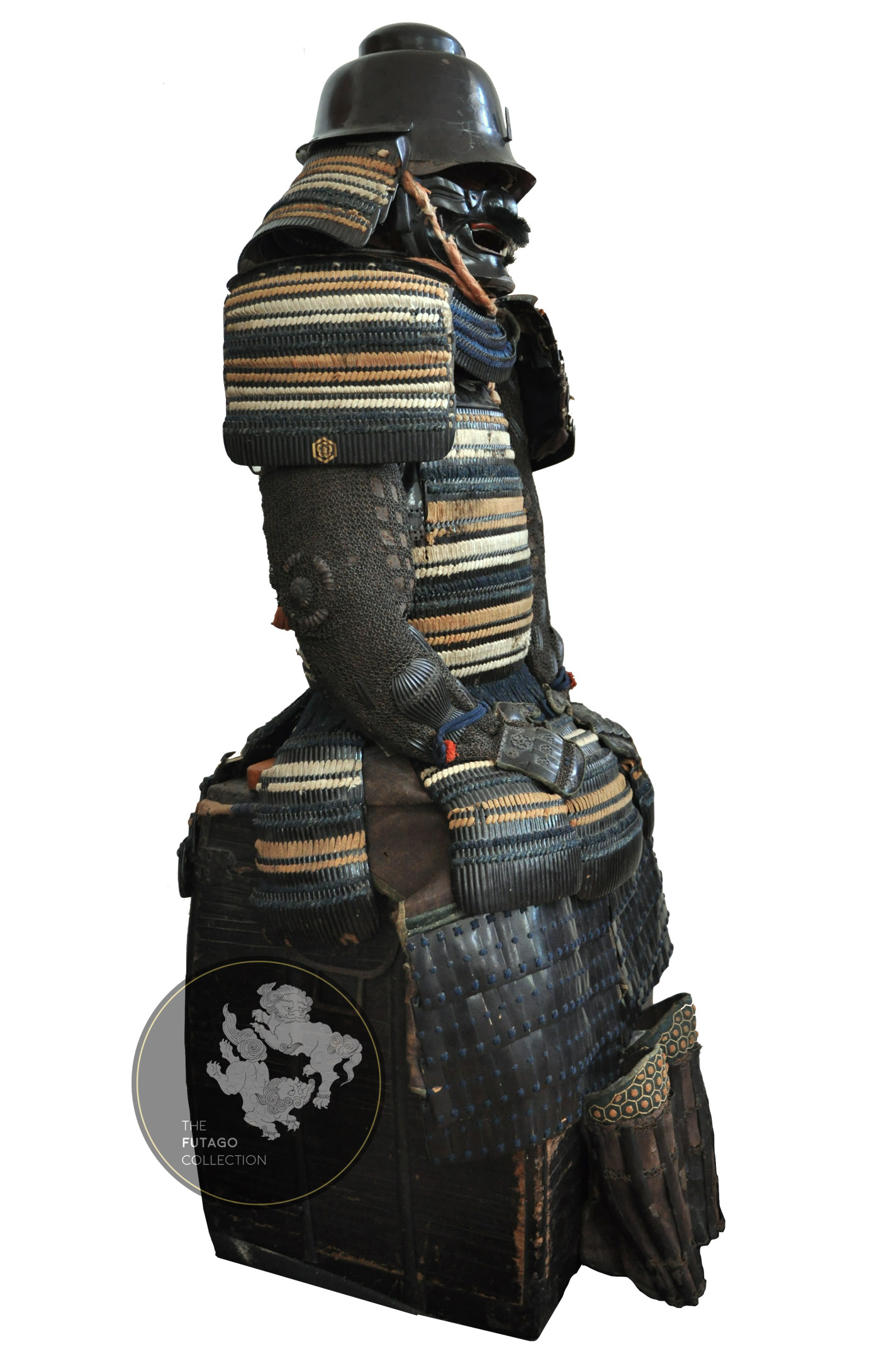
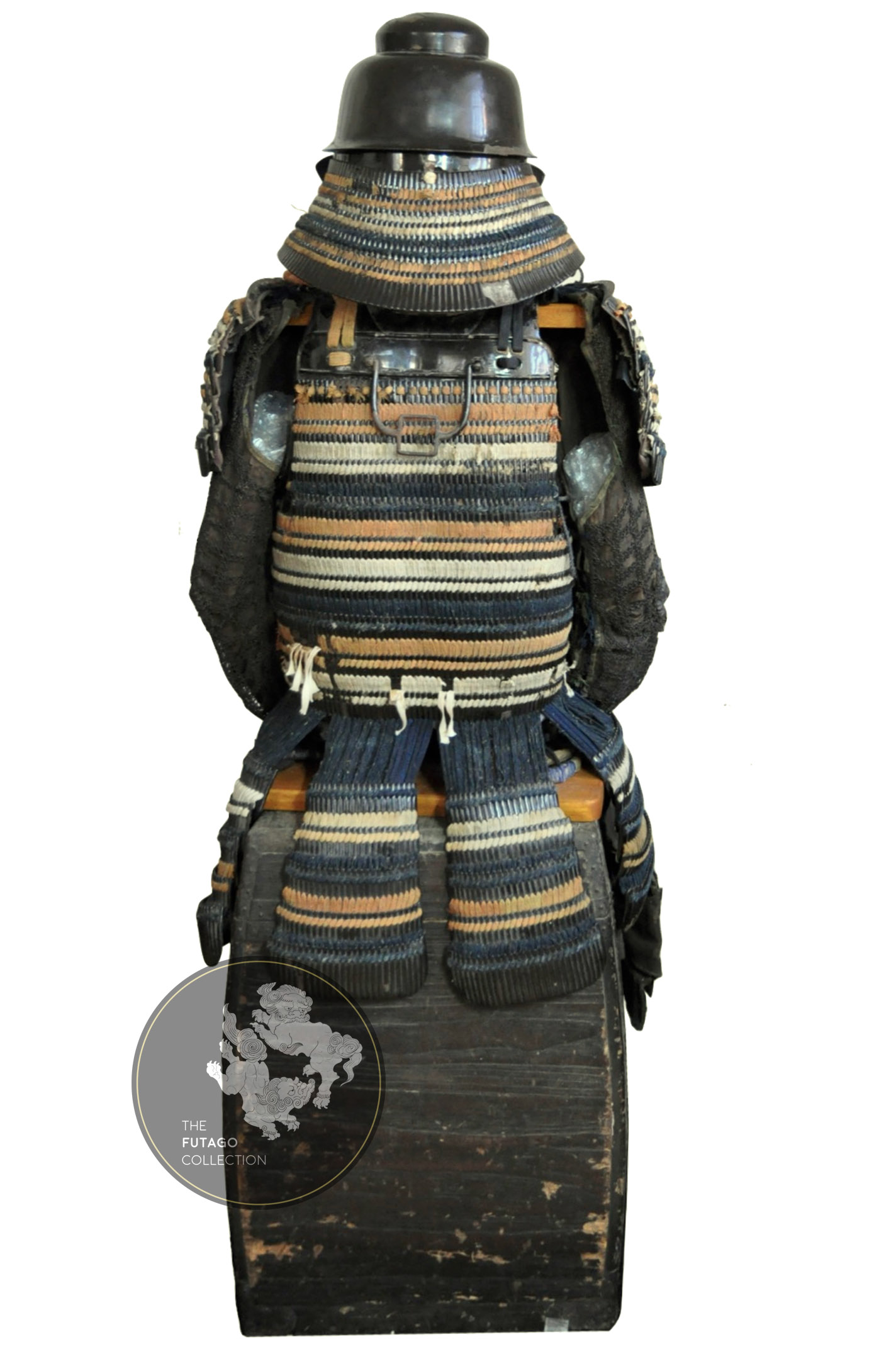
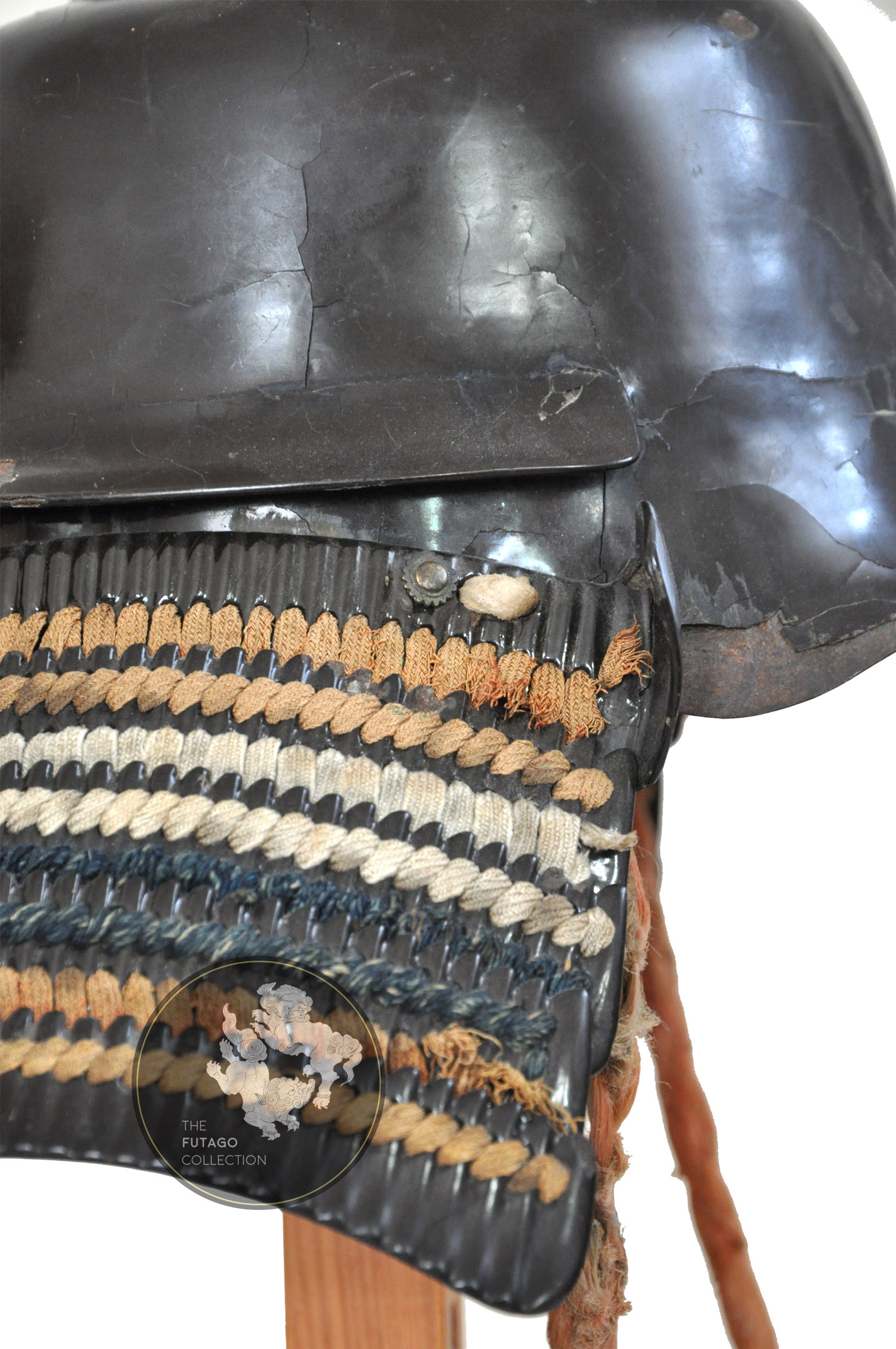
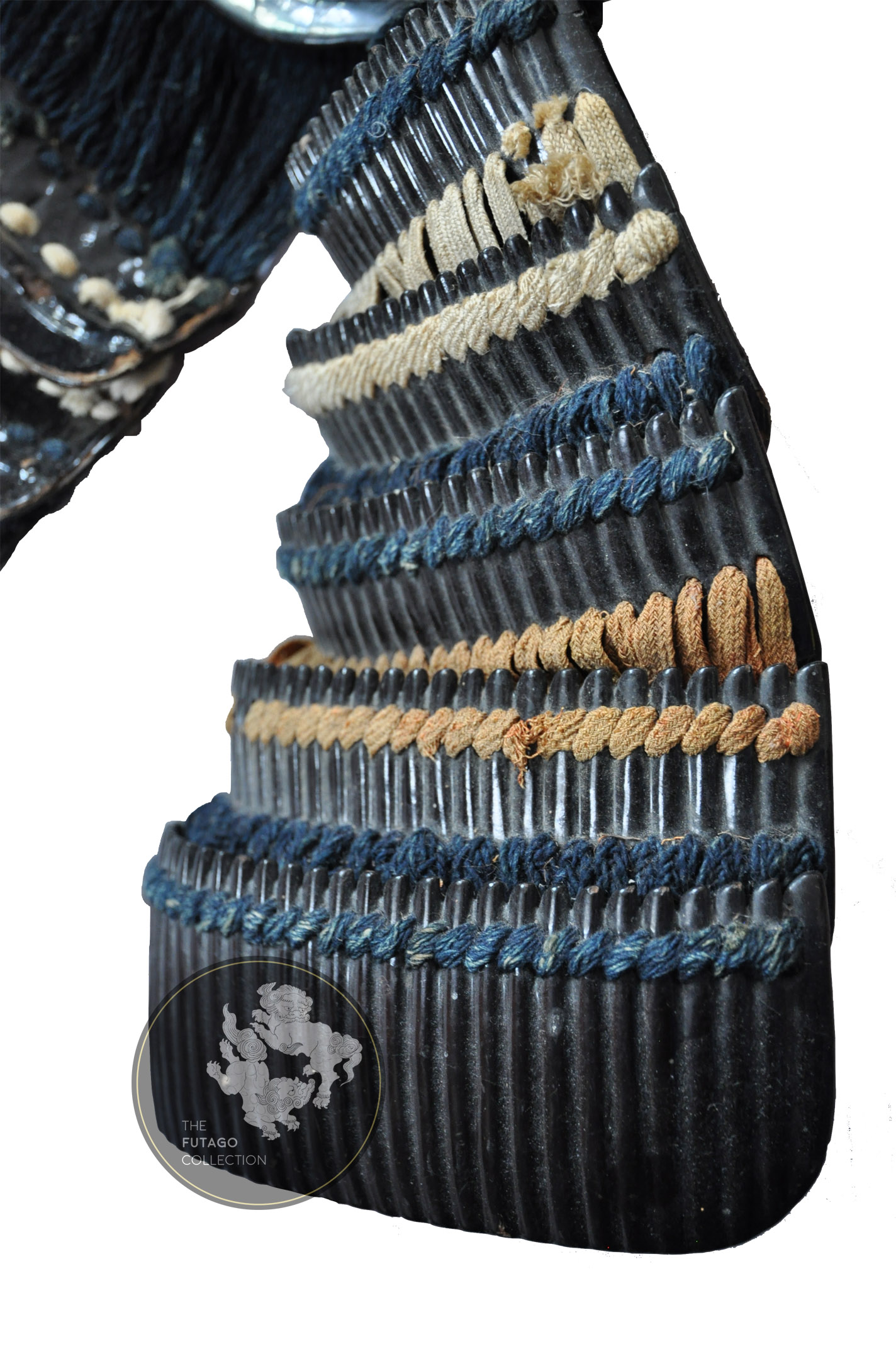
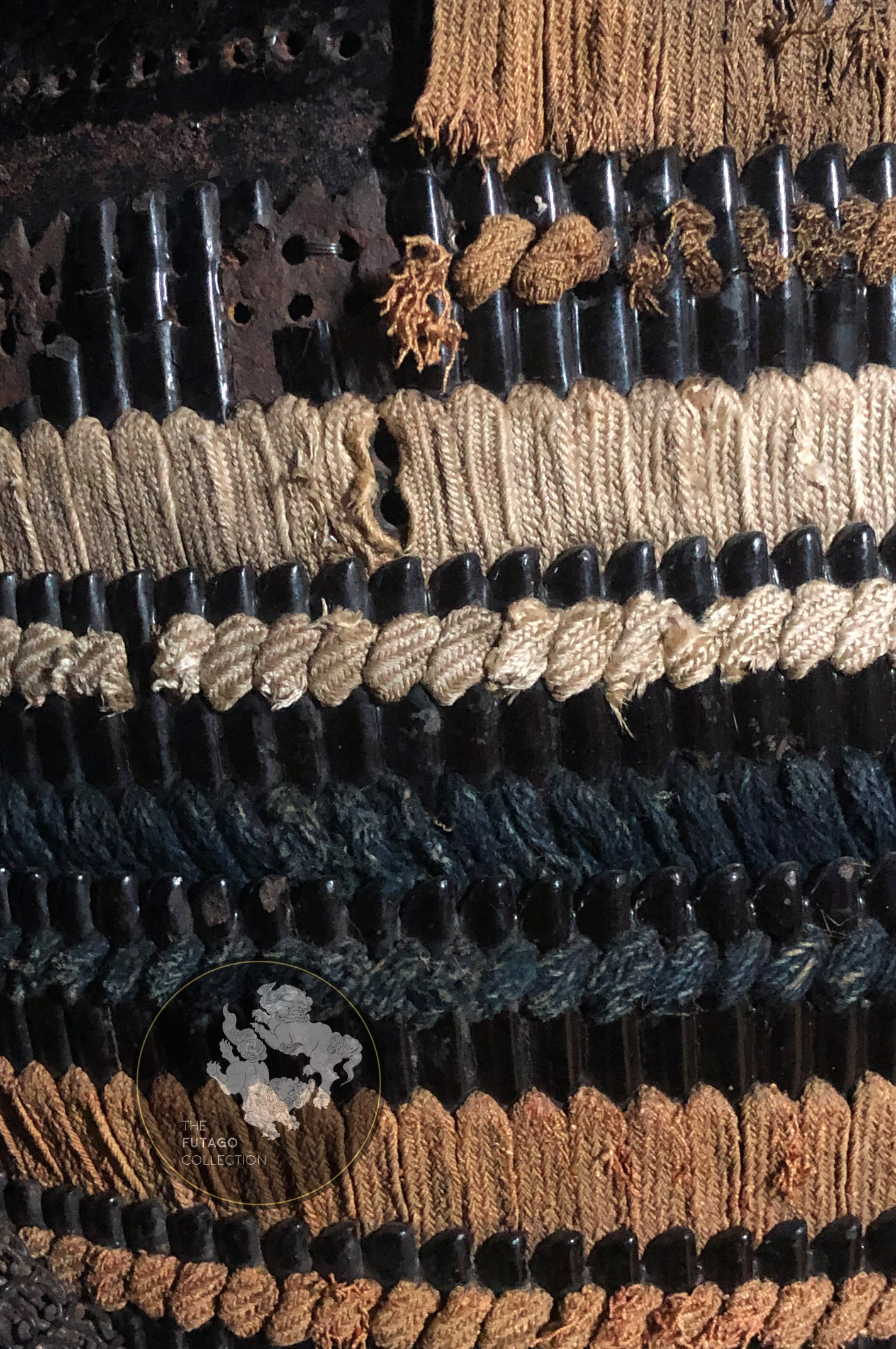
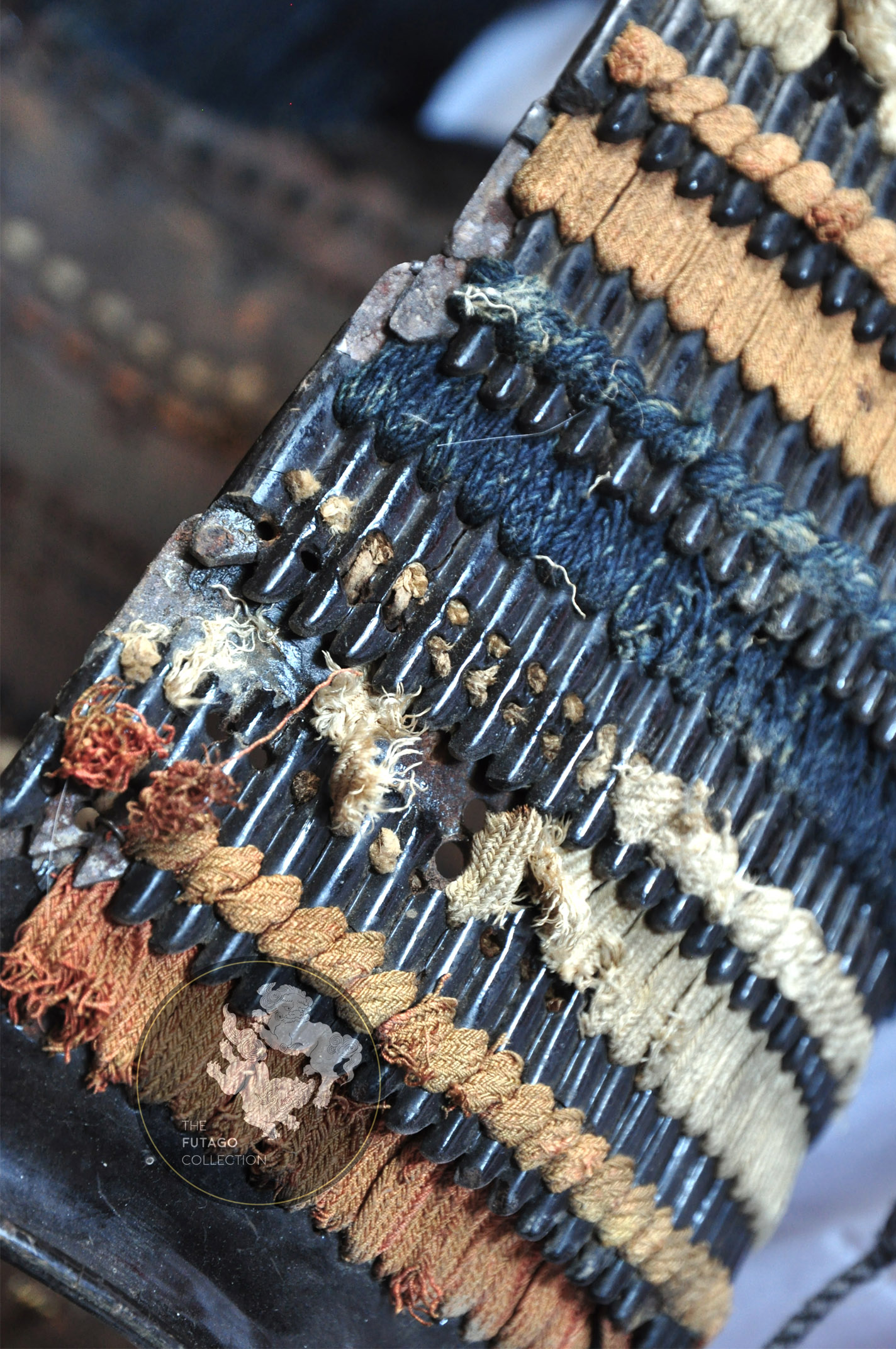
It is an early Iro Iro Kiritsuke Kozane two-piece Cuirass, which is laced in kebiki in three different colors with a Kawari Kabuto (変わり兜). The lacing colors are indigo-black; orange, which lost its brightness upon the time and became more golden-yellow; and of course, some white lacing. This color palette is a good example of the taste of colorful laced armors of the Tenshō (天正) Period.
胴は二枚の板から成る初期の色々切りつけ小札で、三色の紐を使用した毛引威が用いられています。変わり兜に関しても同じ仕様で、配色は濃い藍色、山吹色、白となっていました。なお山吹色の発色は時間の経過とともに褪せており、現在では黄色っぽく見えます。このような色の組み合わせは天正時代の色彩豊かな具足を代表するものとなっています。
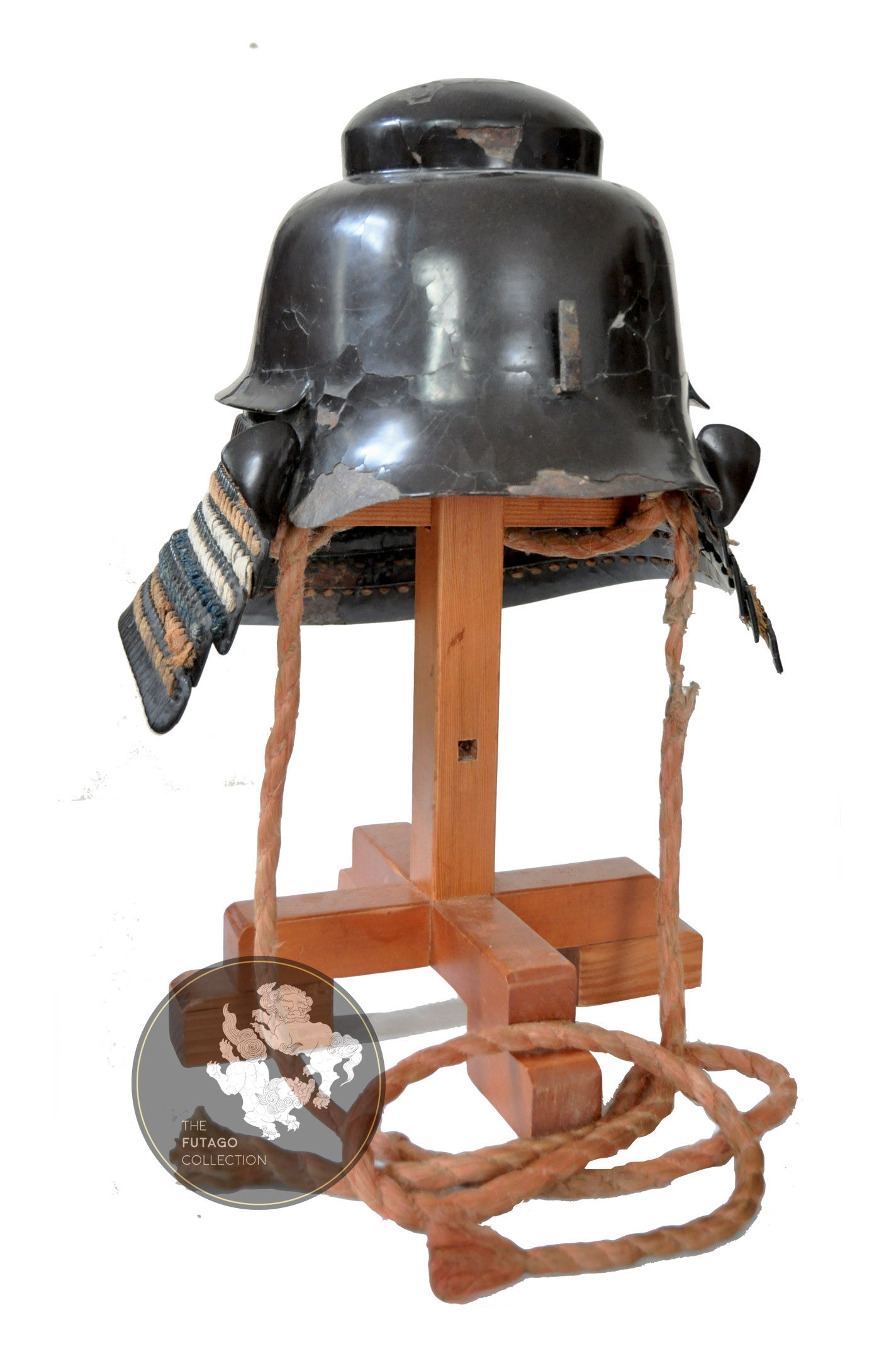
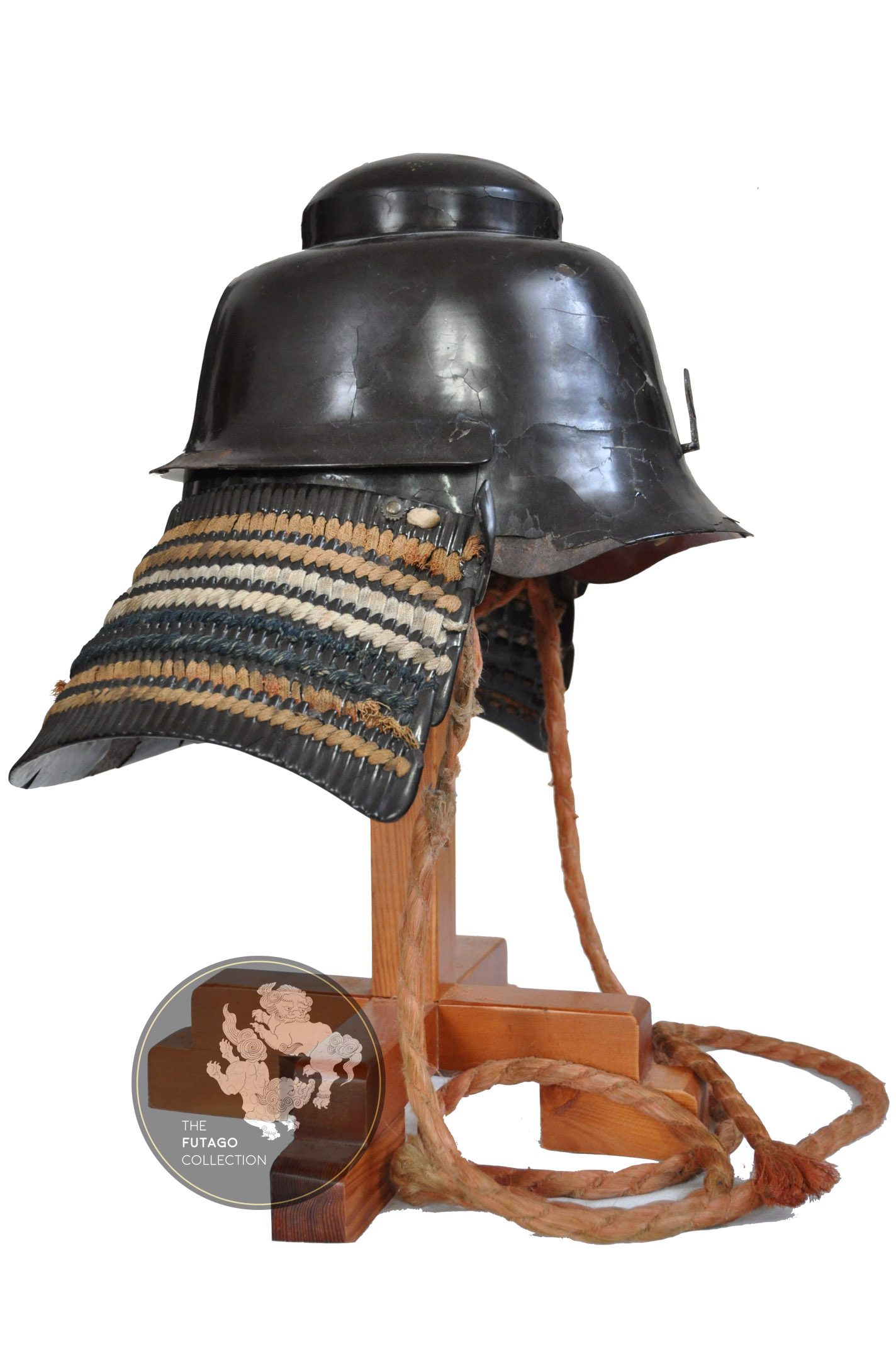
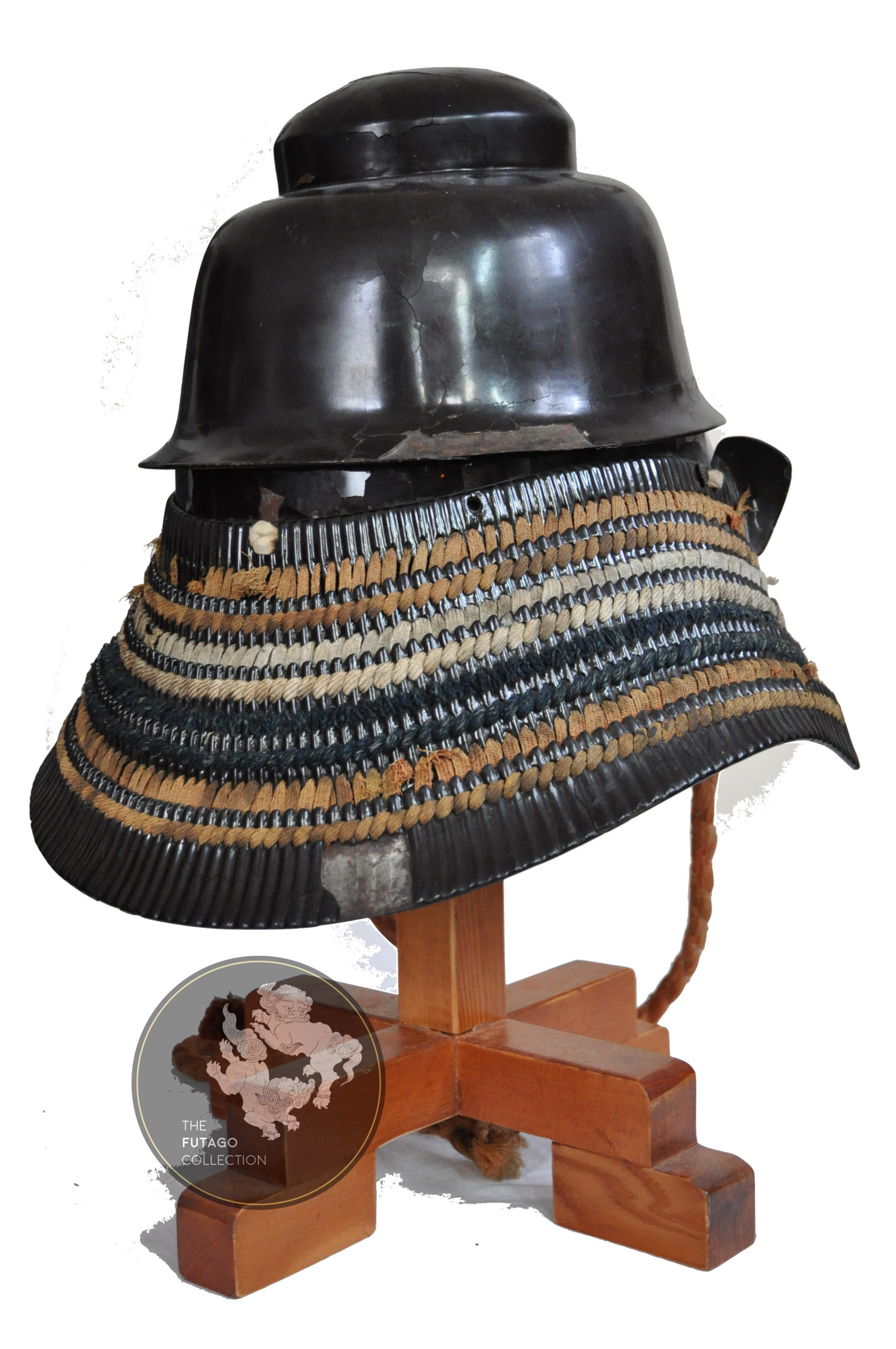
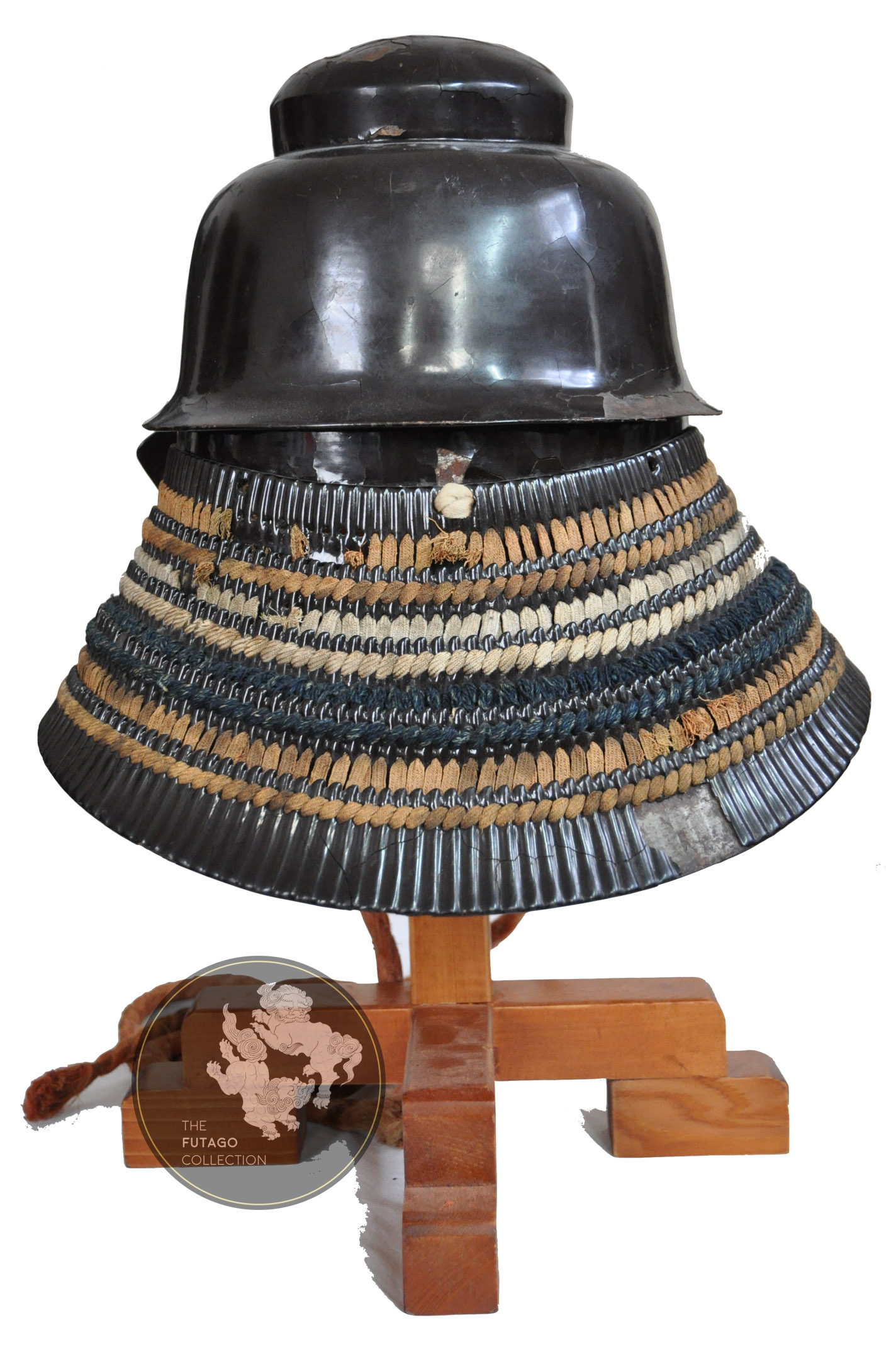
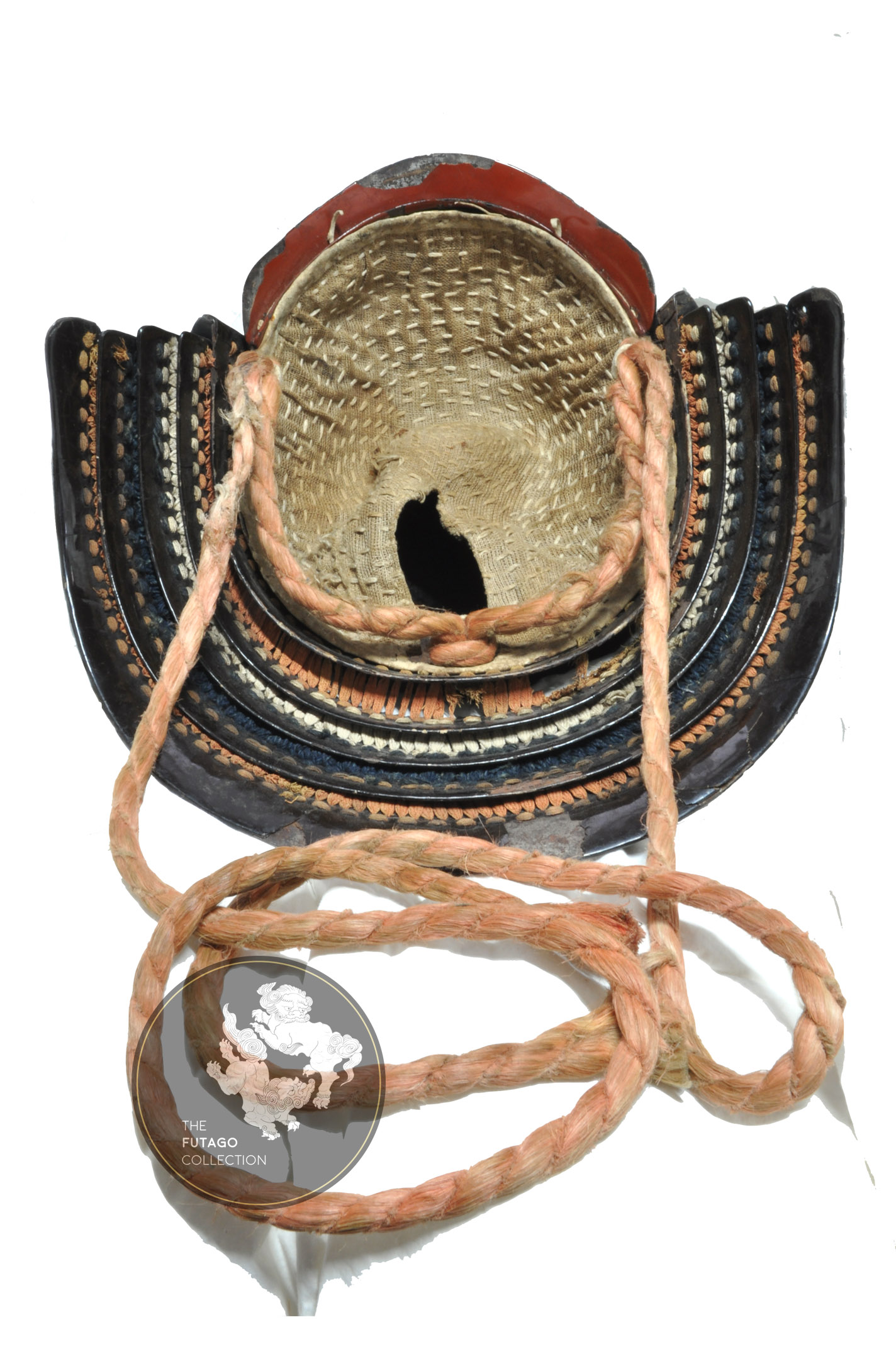
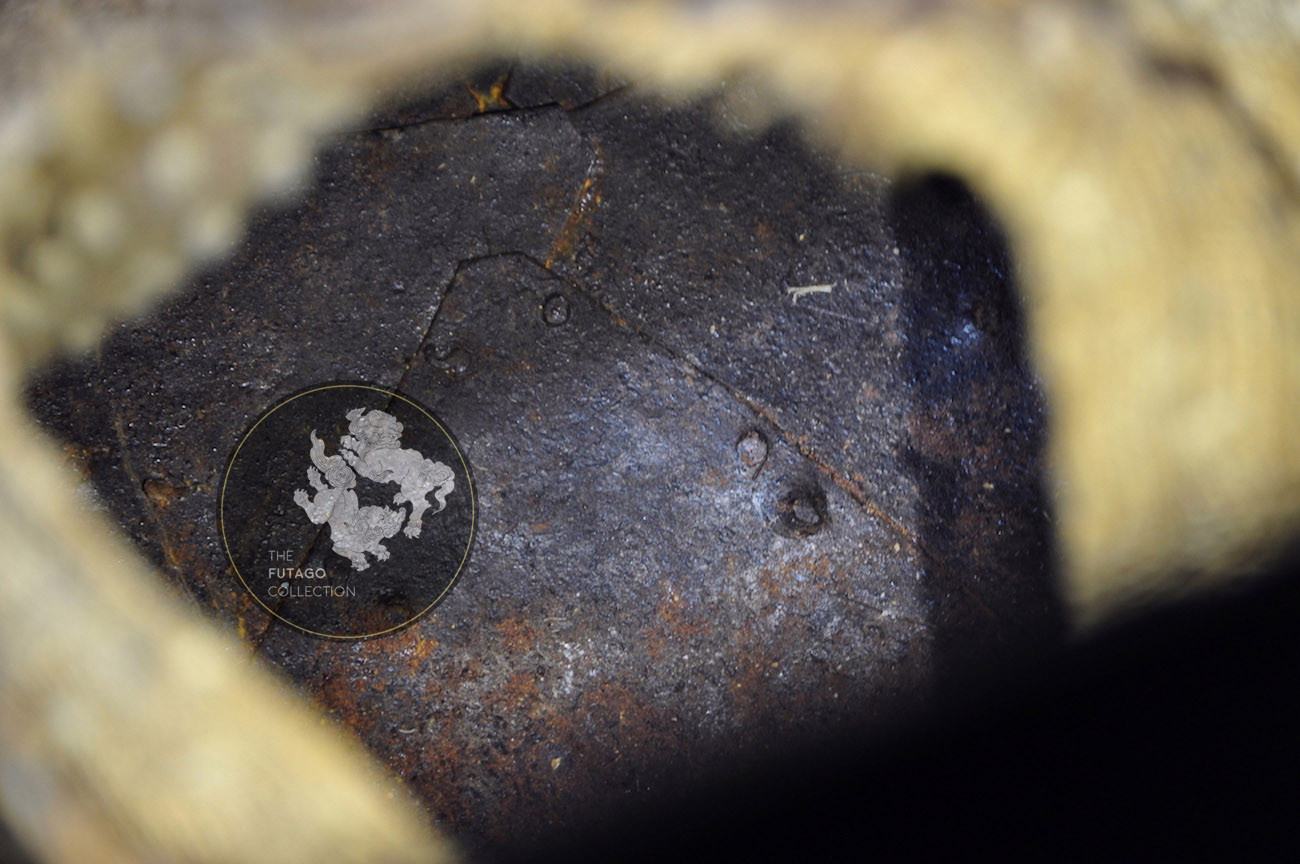
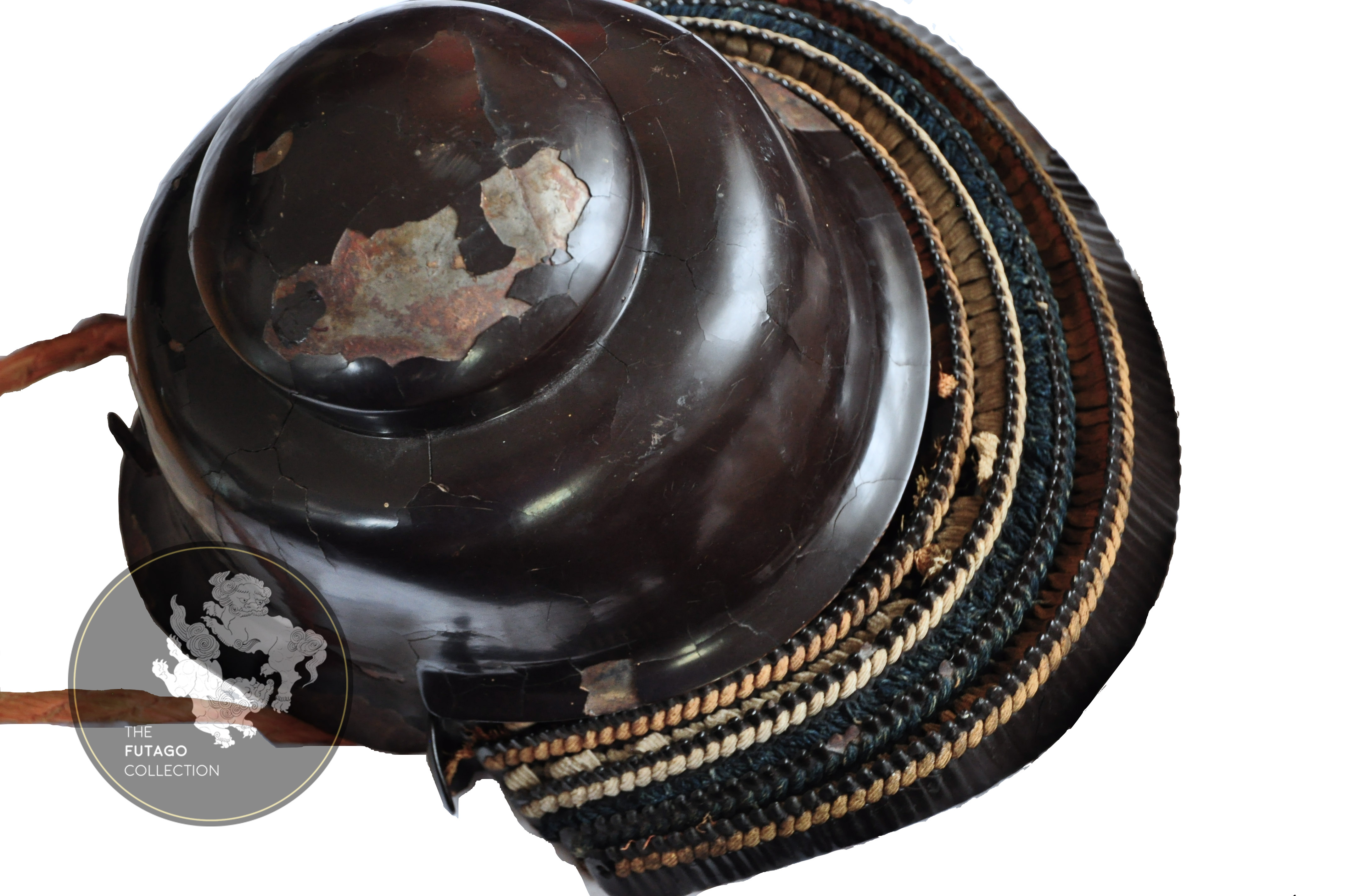
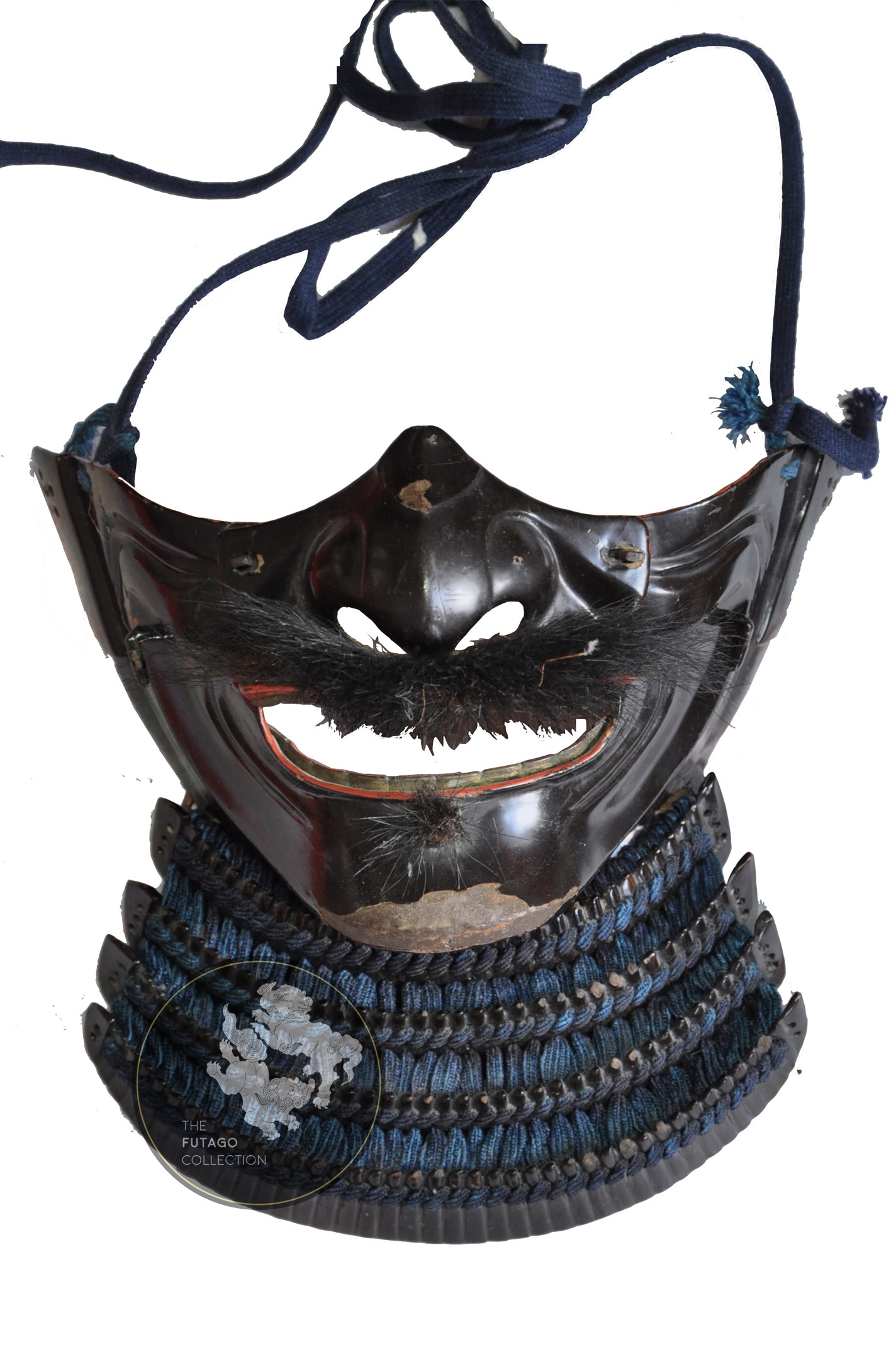
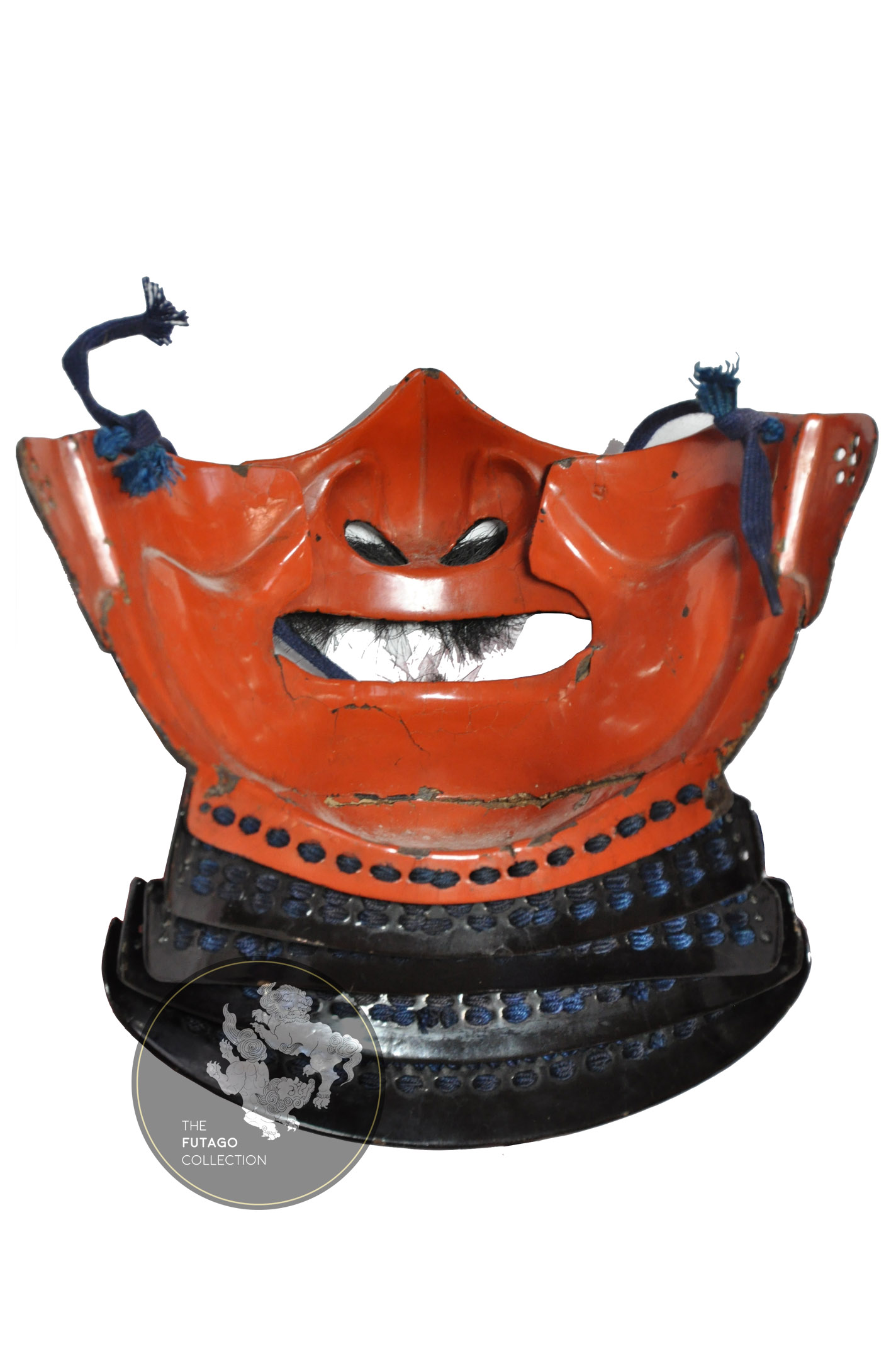
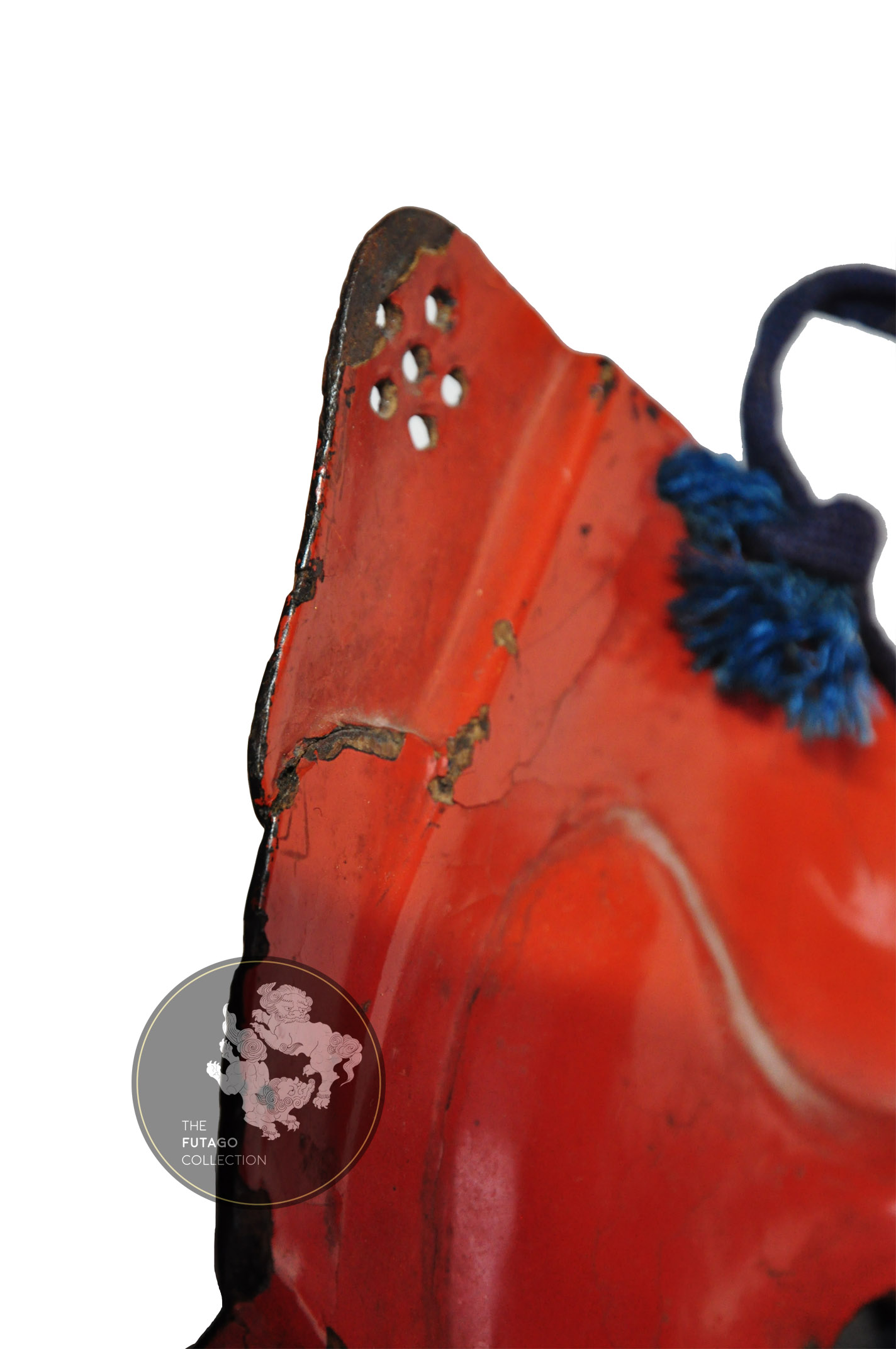
The helmet is an early unique Gosu Kawari Kabuto fully made of embossed iron with an attached iron cap. The style and interpretation seem to be a combination of a 16th-century Portuguese or Spanish hat with a Kanmuri on top. There are also known scroll paintings of Tenjin traveling China from the Muromachi period showing Tenjin wearing a very similar hat. The Menpo is brownish-black lacquered with a bear fur mustache and red-lacquered interior. The blue lacing of the Yodare-Kake is not authentic and must have been exchanged sometime during the Edo period.
兜は初期の合子変わり兜で鉄製の鉢と浮彫の施された鉄板から成り、16世紀のポルトガルまたはスペインの帽子と冠を組み合わせたものと推測されています。他の絵画や同形式の兜と綿密な比較調査を行った結果、これは天神が着用したとされる兜とよく似た形状だという見解が出ています。天神が中国を旅している場面を描いた室町時代の掛け軸にも、同様の兜をかぶっている様子が描かれています。
面頬は黒漆で熊の毛でできた付け髭があり、内側は赤の漆で塗られています。喉輪に使われている青い紐はオリジナルのものではなく、江戸時代に付け替えられたようです。
Kiritsuke Kozane Okegawa Do Gusoku was a lamellae-style armor, commonly used amongst high-ranking samurai warriors and Daimyo of the mid 16th century.
The lacquer works of the Kiritsuke Kozane is very delicate. Parts, like the Munaita, the Oshitsuke no Ita, and the Wakiita, show an evolution in a new style of Tosei Gusoku, which started in the 1570s. The Munaita shows an inwards bend and, to the Oshitsuke no Ita, there is an added curved intermediate piece in between the Watagami for reinforcement.
切り付け小札 桶川胴具足は鉄板を合わせて作られている具足の一種で、16世紀には位の高い侍や大名の間で広く身につけられていました。切り付け小札には精巧な漆技術が用いられています。胸板、押付板、脇板といった箇所には1570年代から発展した当世具足の新しい様式が見られます。胸板には内側にかけて湾曲がありますが、押付板においても綿噛の間に曲がった板が取り付けられており、強化のための工夫がなされています。
There are only a handful known armors from the 16th-century showing this kind of evolution. For example; the multicolor-laced Gusoku with Kawari Kabuto of Toyotomi Hideyoshi (Hideyoshi and Kiyomasa Memorial Museum Nagoya City); a red laced Hon Kozane Tosei Gusoku worn by Akechi Mitsuhide, which is part of the Collection of Tatsuo Ii (Nakamura) in Kyoto or; maybe the most important, a red and white laced cuirass of Kiritsuke Kozane from the Yushukan Museum (遊就館) in Tokyo.
16世紀の具足でこのような様式が見られるものは数が限られています。例としていくつか挙げますと、色鮮やかな紐が使用された豊臣秀吉の具足と変わり兜(名古屋市秀吉清正記念館蔵)、明智光秀が使用した本小札当世具足(井伊達夫氏所蔵)があり、その中でも最も重要なものは恐らく紅白の切り付け小札(東京都遊就館蔵)でしょう。
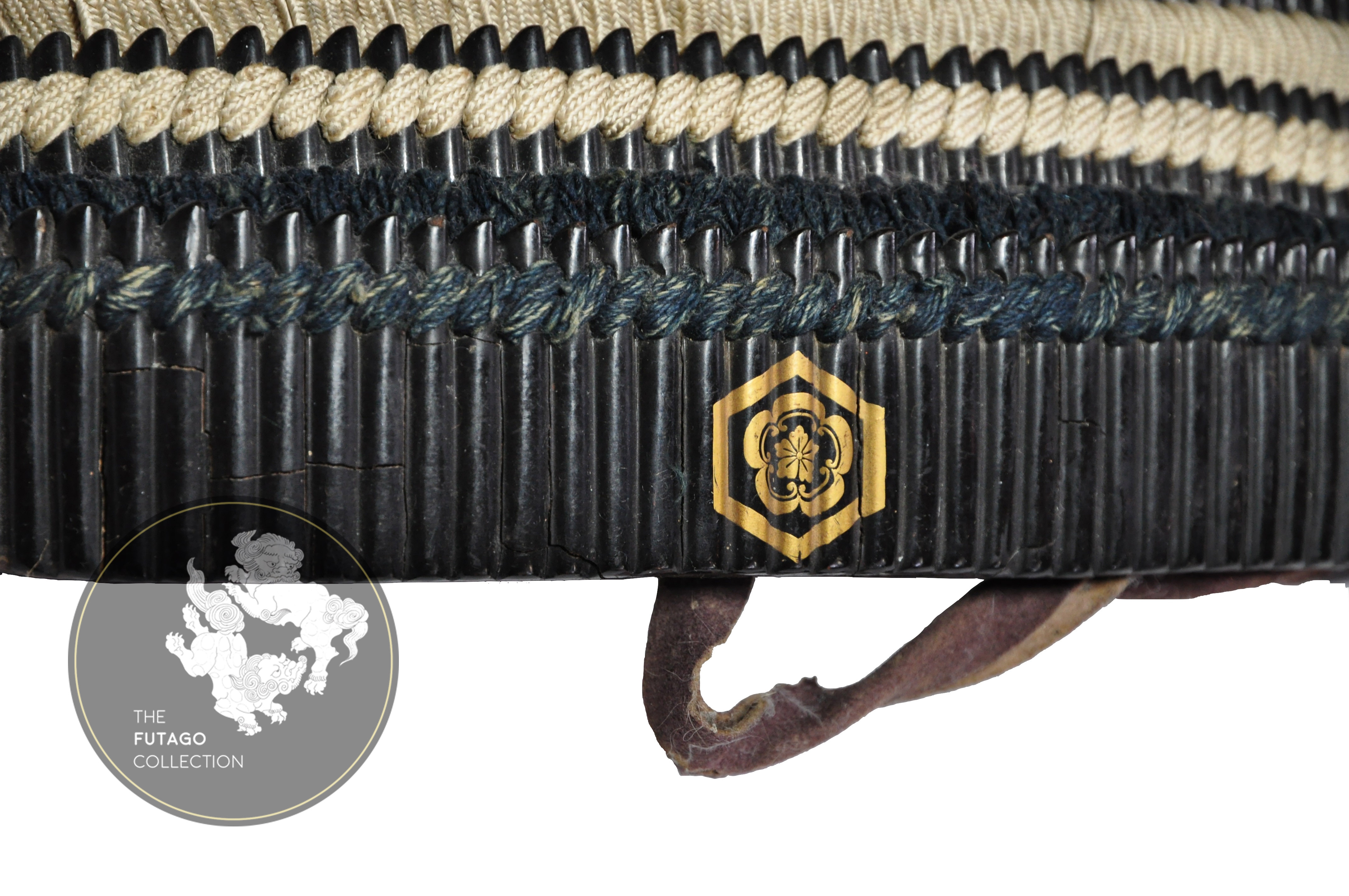
The Manchira is made out of lacquered leather and a very fine early Chinese or Japanese brocade, which makes sense, because of the connection between the Oda and the Portuguese Nanban trade period. The Sode is also laced in indigo, orange, and white with a golden lacquered heraldic crest of the Oda Family surrounded by a Hexagon. Even if this Armor comes from a timeframe after the relationships between the Oda and Azai ended, the Hexagon is probably related to the Azai.
この満智羅は漆皮に加え精巧な錦織(初期の中国製または日本製のもの)からなっており、織田一族が南蛮貿易を通じてポルトガルと関係があったことを裏付けています。袖には紺、山吹色、白の紐が用いられ、金の漆で塗られた織田氏の紋章が六角形に囲まれる形で描かれています。この甲冑は織田氏と浅井氏の同盟関係が終わった後の時代に作られた可能性もありますが、六角形は浅井氏と関連するものと考えられています。
Azai Nagamsa/The Azai Clan is the only family that is related to Odas from the time between 1564 and 1570 using a Hexagon with their Mon.
浅井長政(浅井氏)は1564年から1570年にかけて織田氏と関係を持った唯一の氏族であり、家紋には六角形が使用されています。
(Translations into Japanese by Nao Okumura. She can be found on Twitter and LinkedIn.)


 THE FUTAGO COLLECTION