
Edo Period (18th Century)
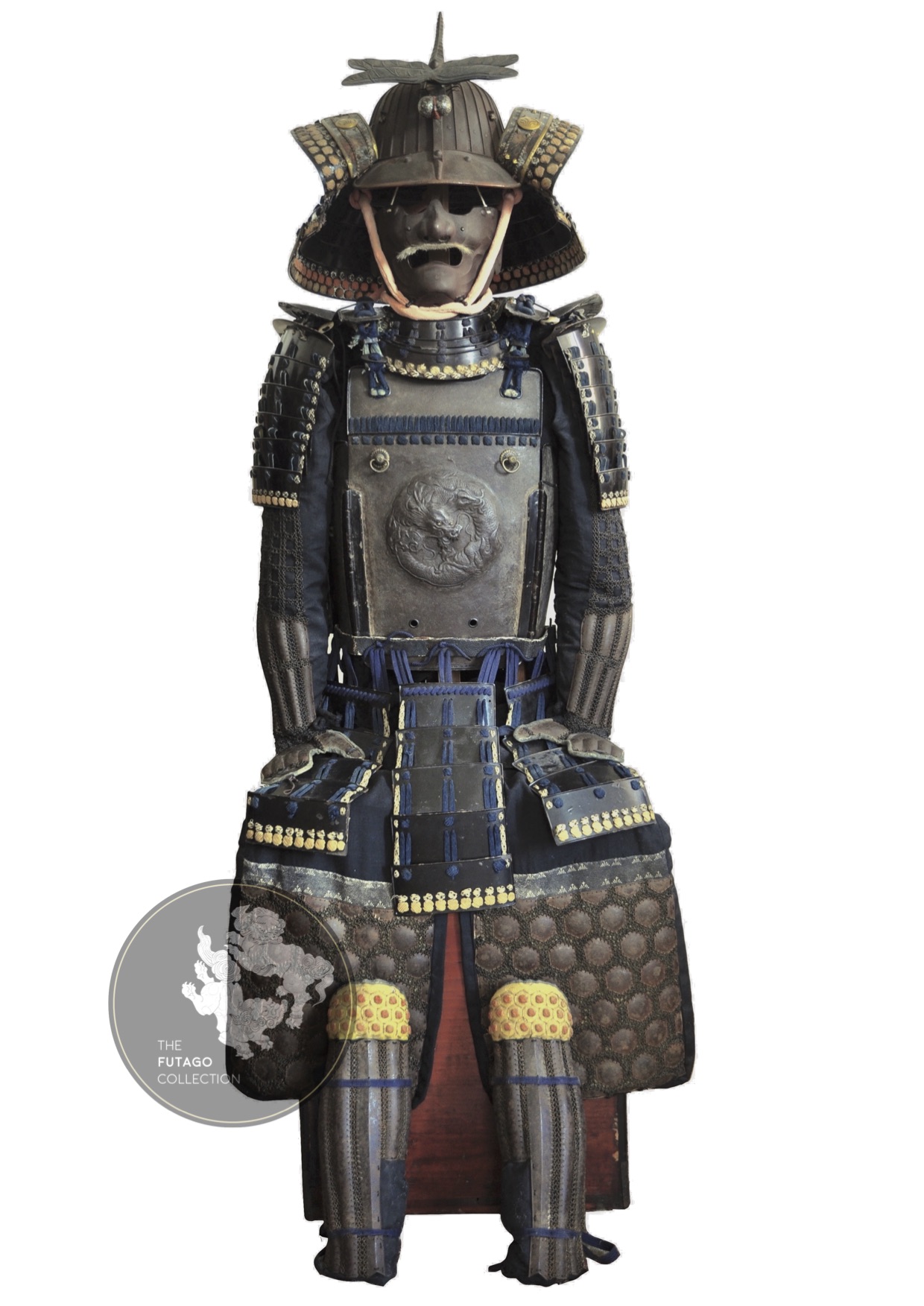
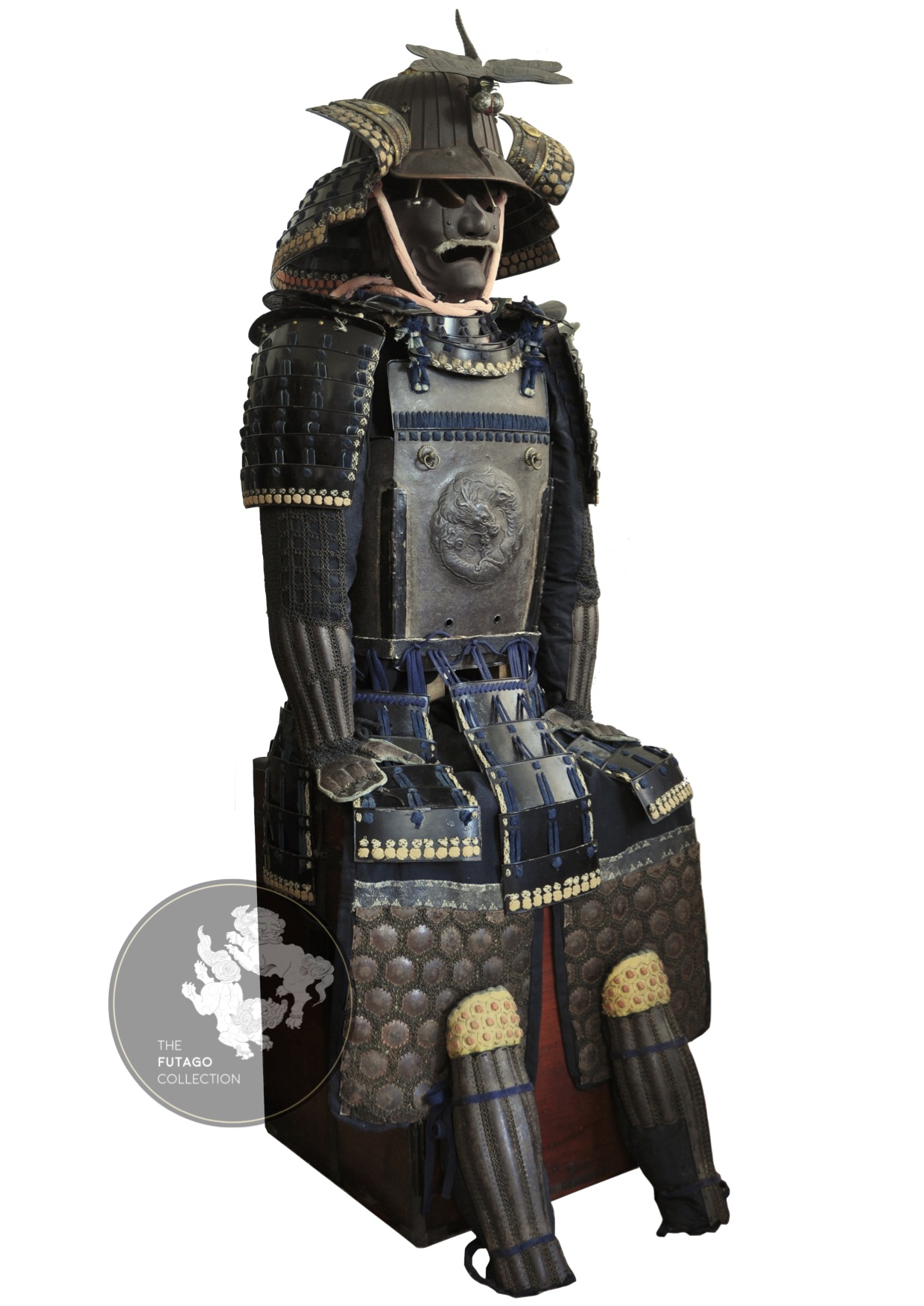
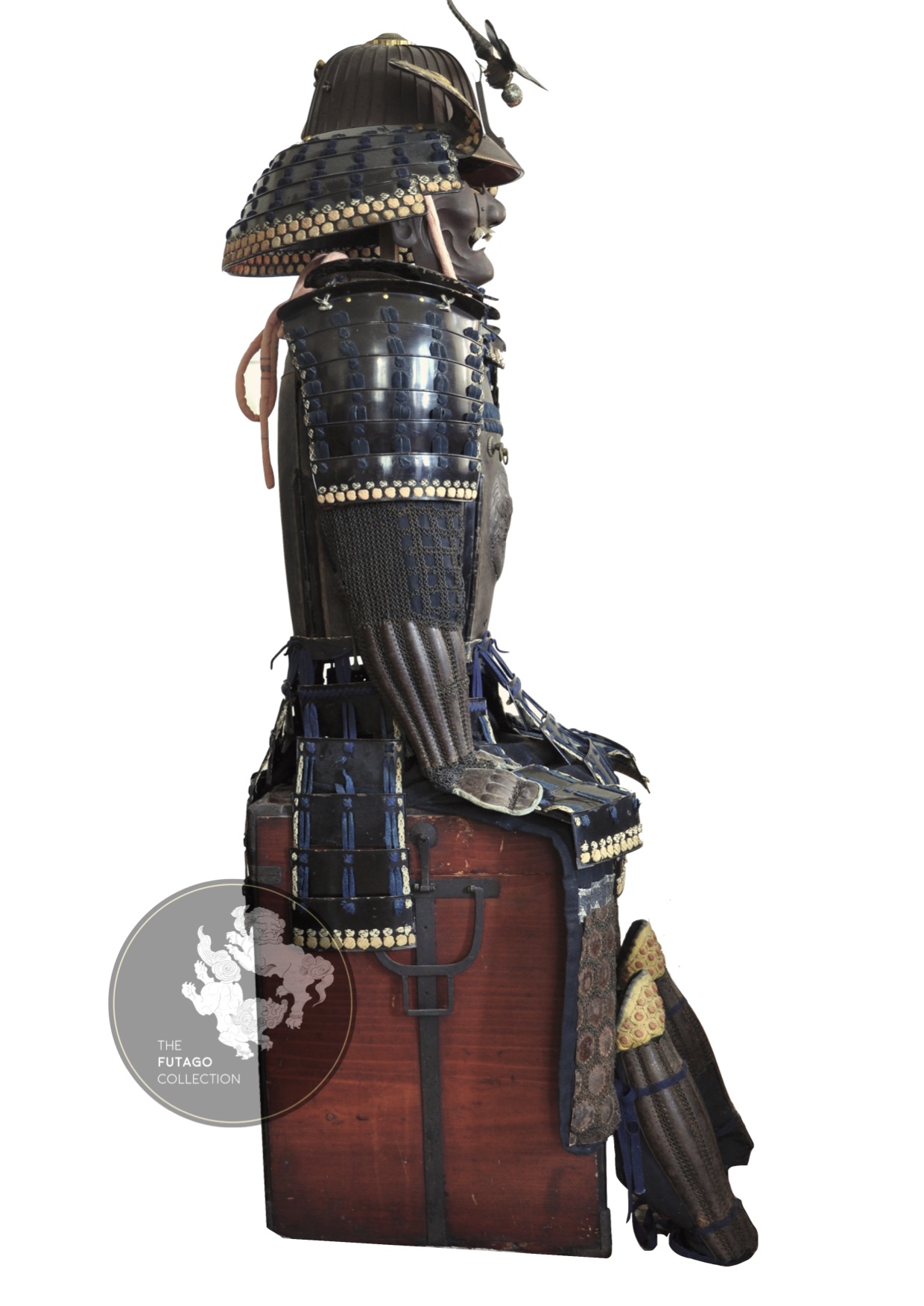
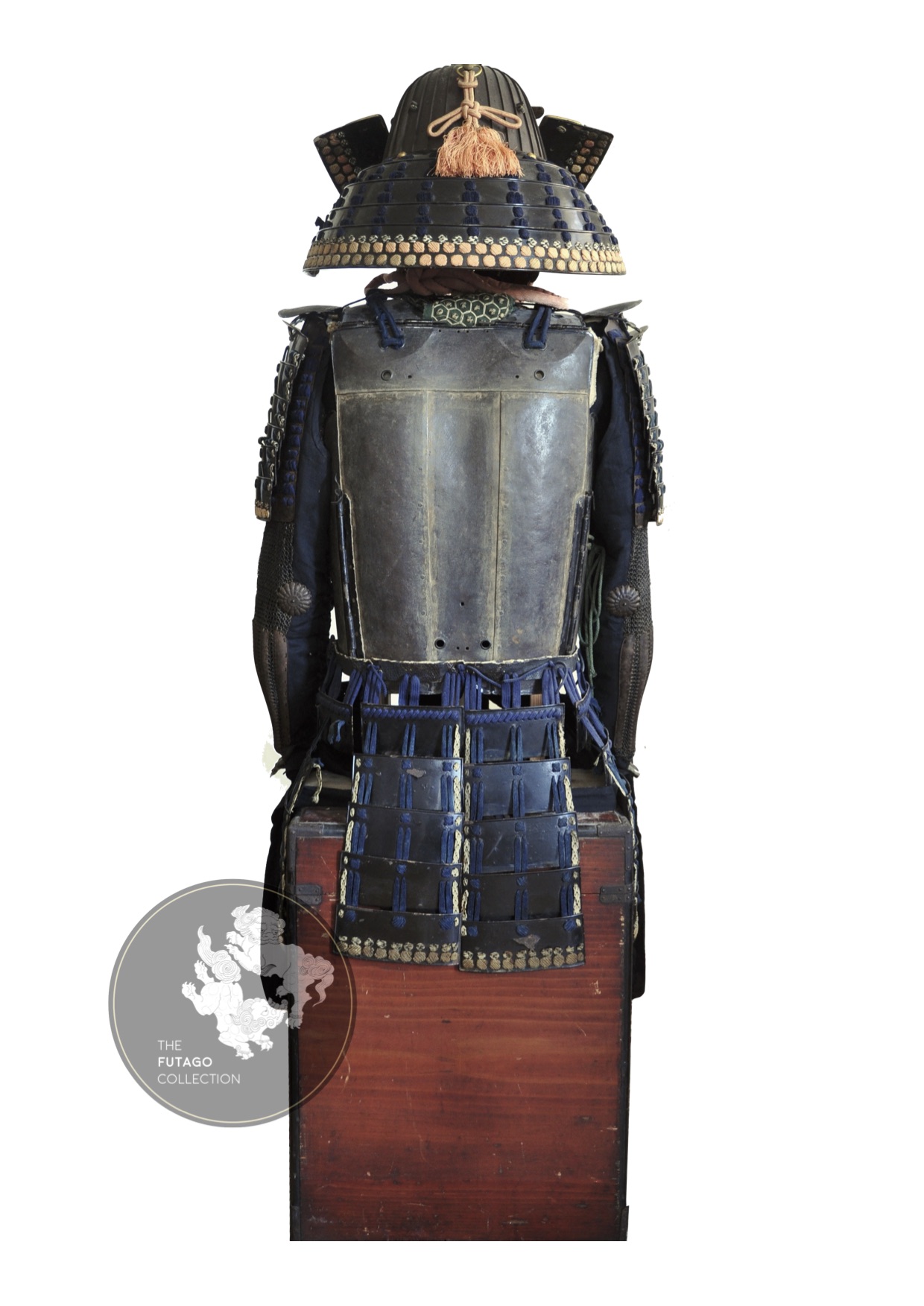
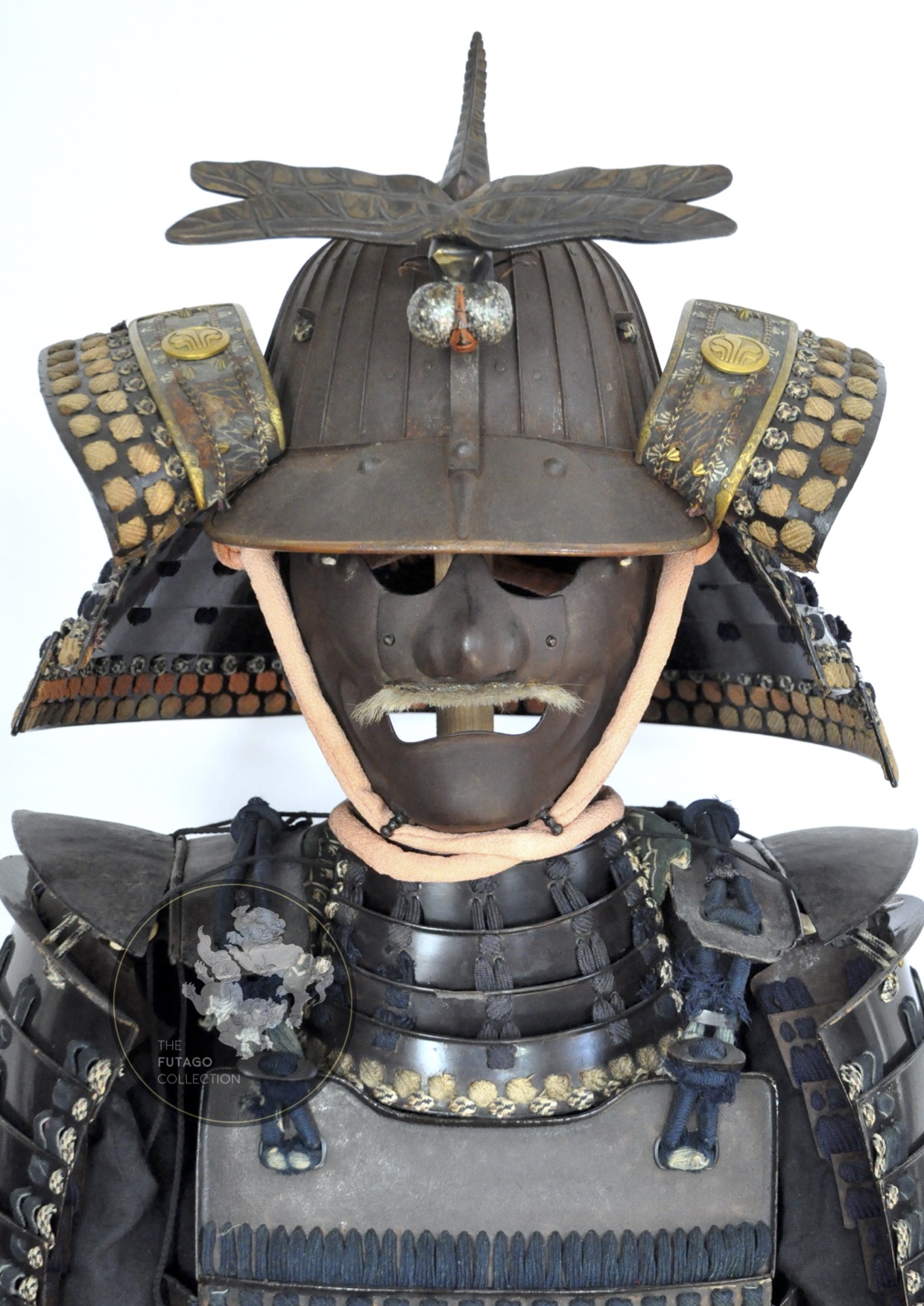
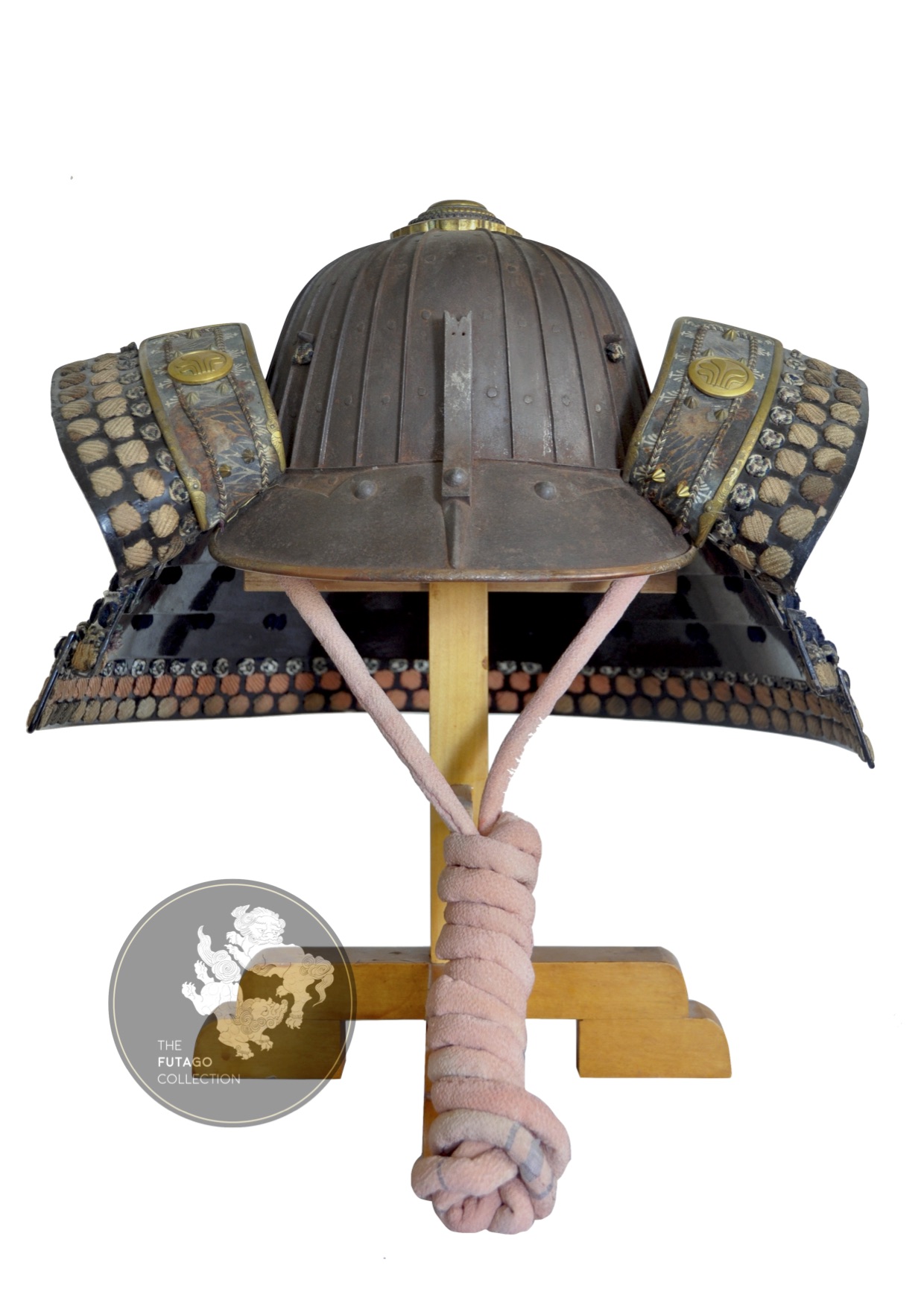
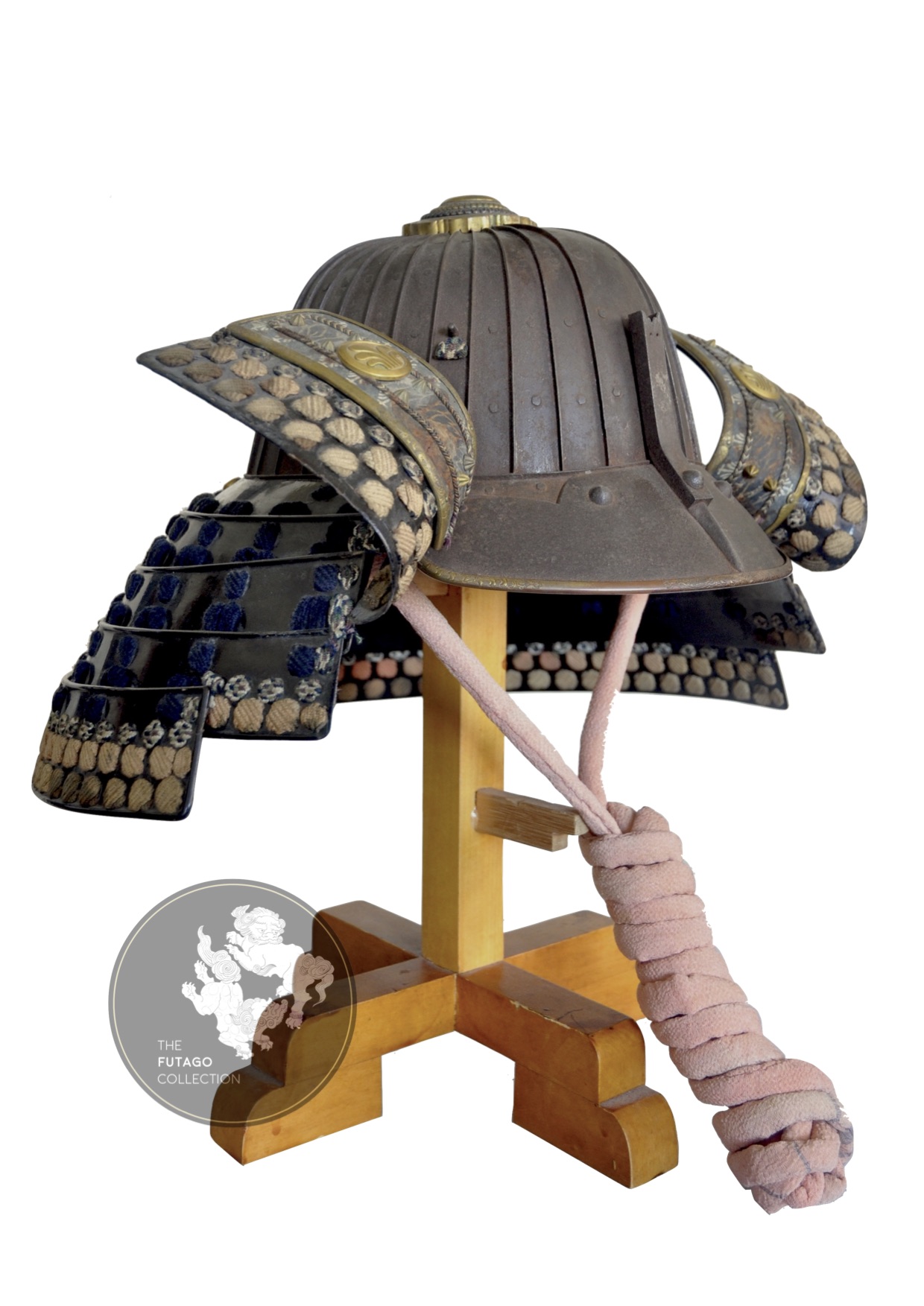
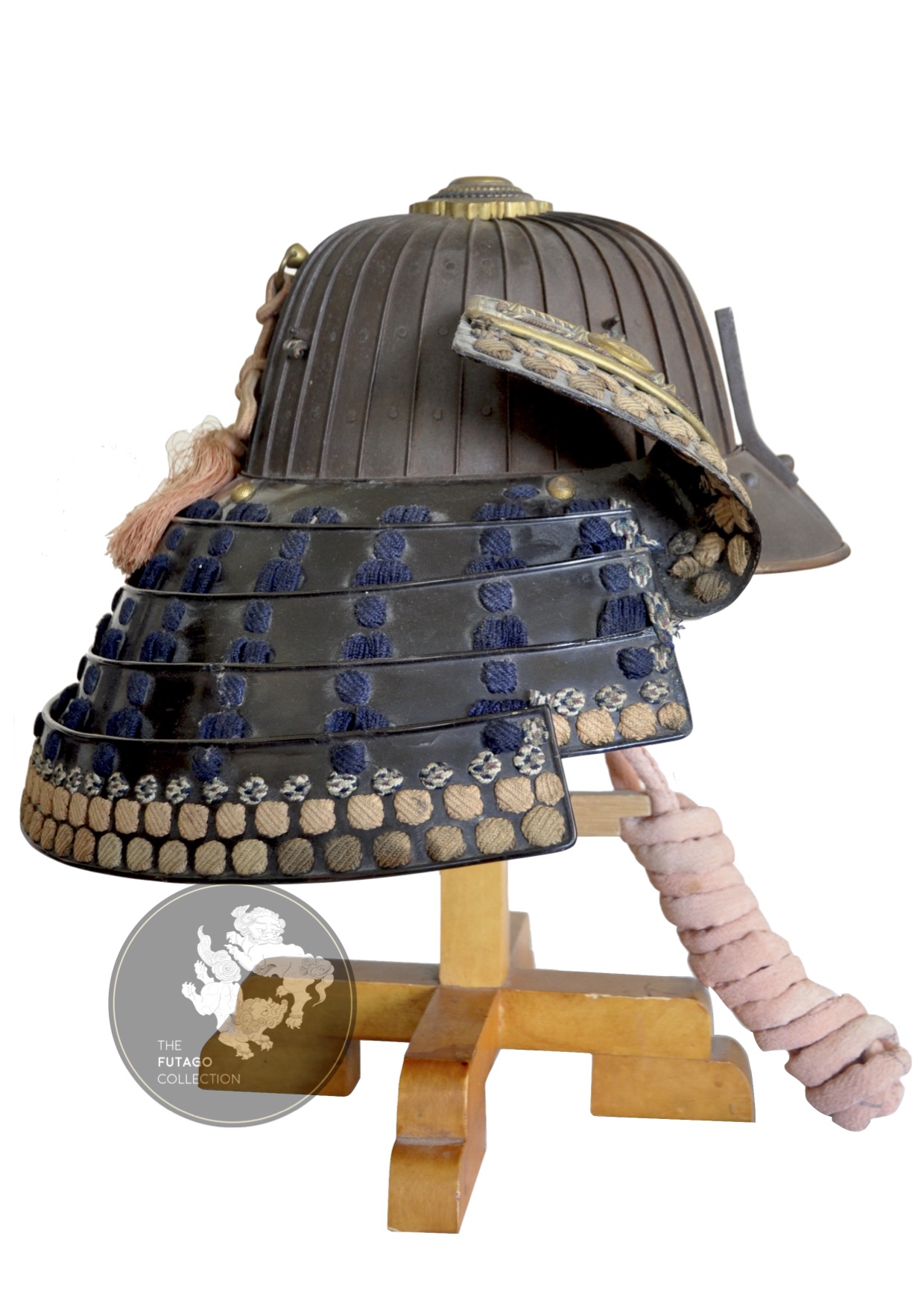
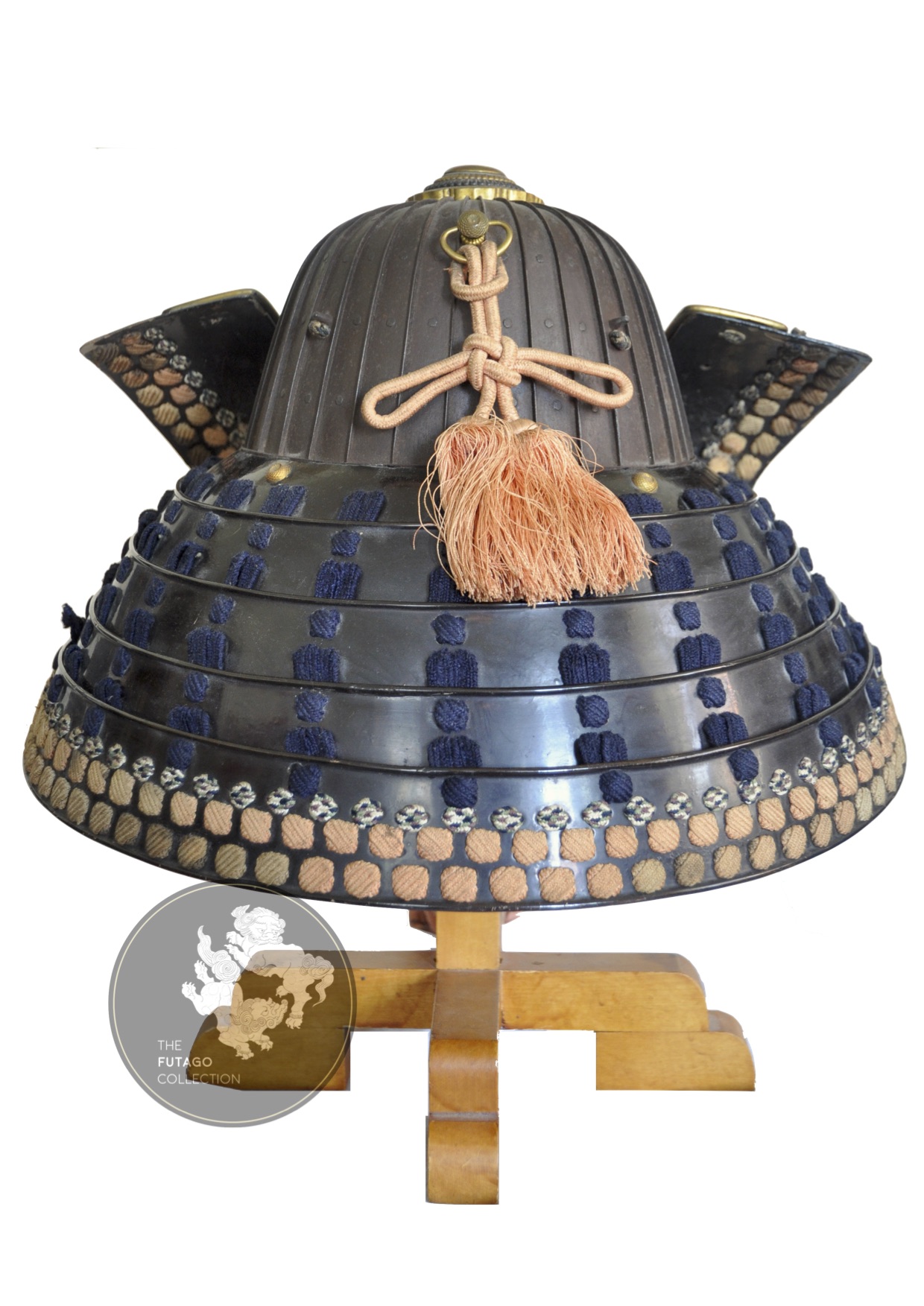
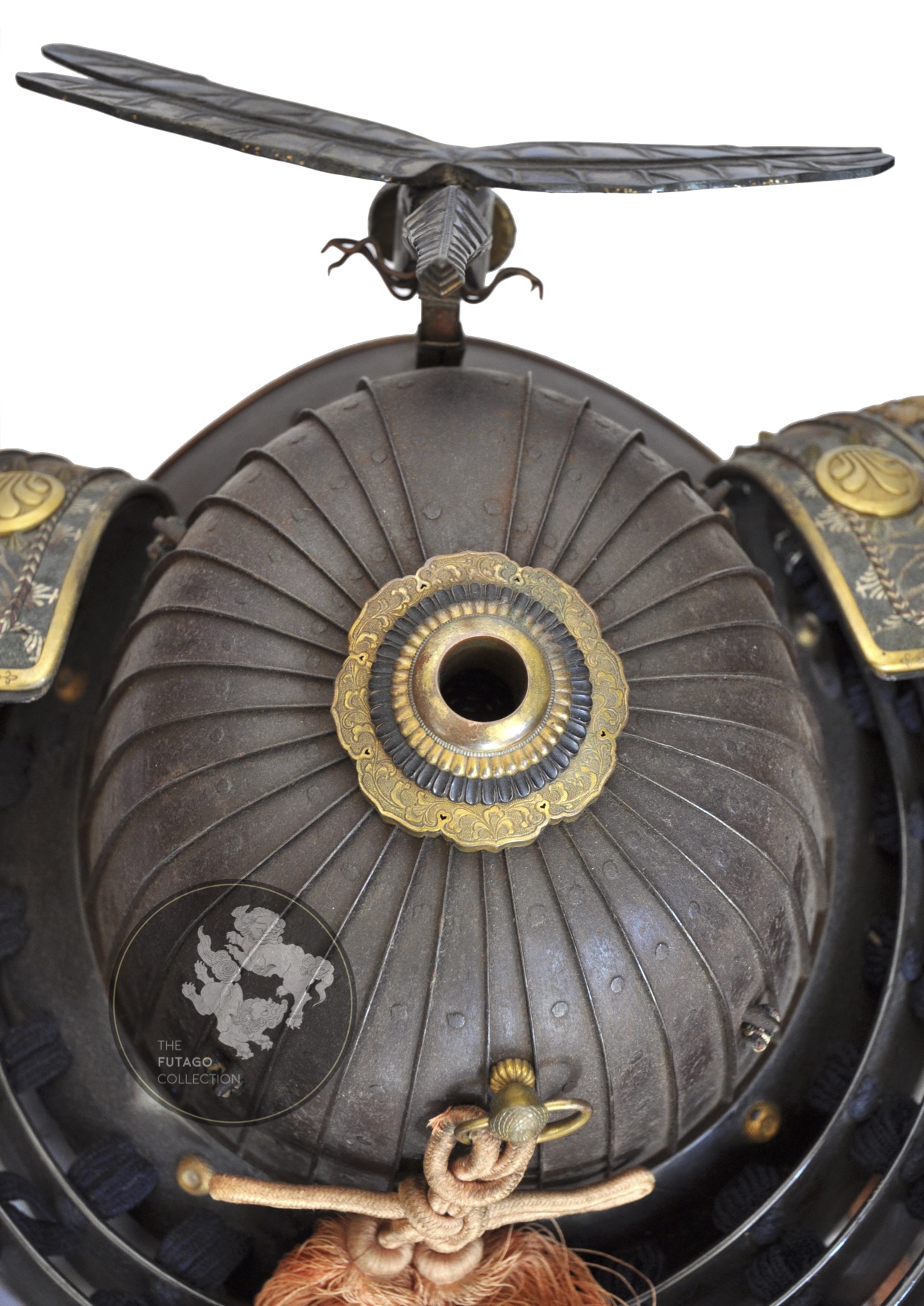
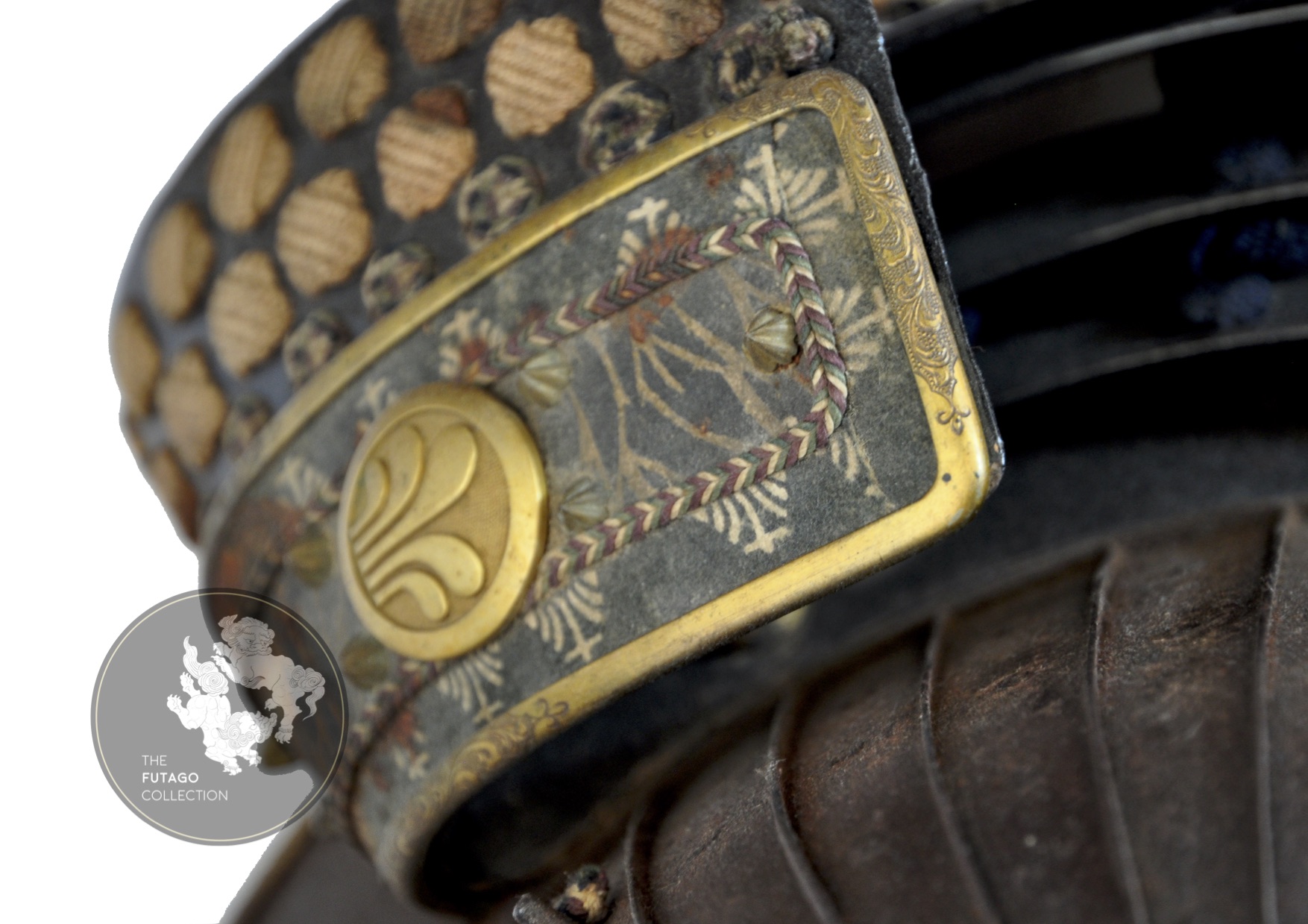
This Myochin school Uchidashi Armor from the 18th Century constructed of iron plates compares a 32 plates suji kabuto with a gilded three lame copper Tehen Kanemono mounted with a black lacquered, wide five-lame Shikoro. The Fukigaeshi adorned with stenciled doeskin and applied with gilded copper family crests and engraved golden Fukurin decorations.
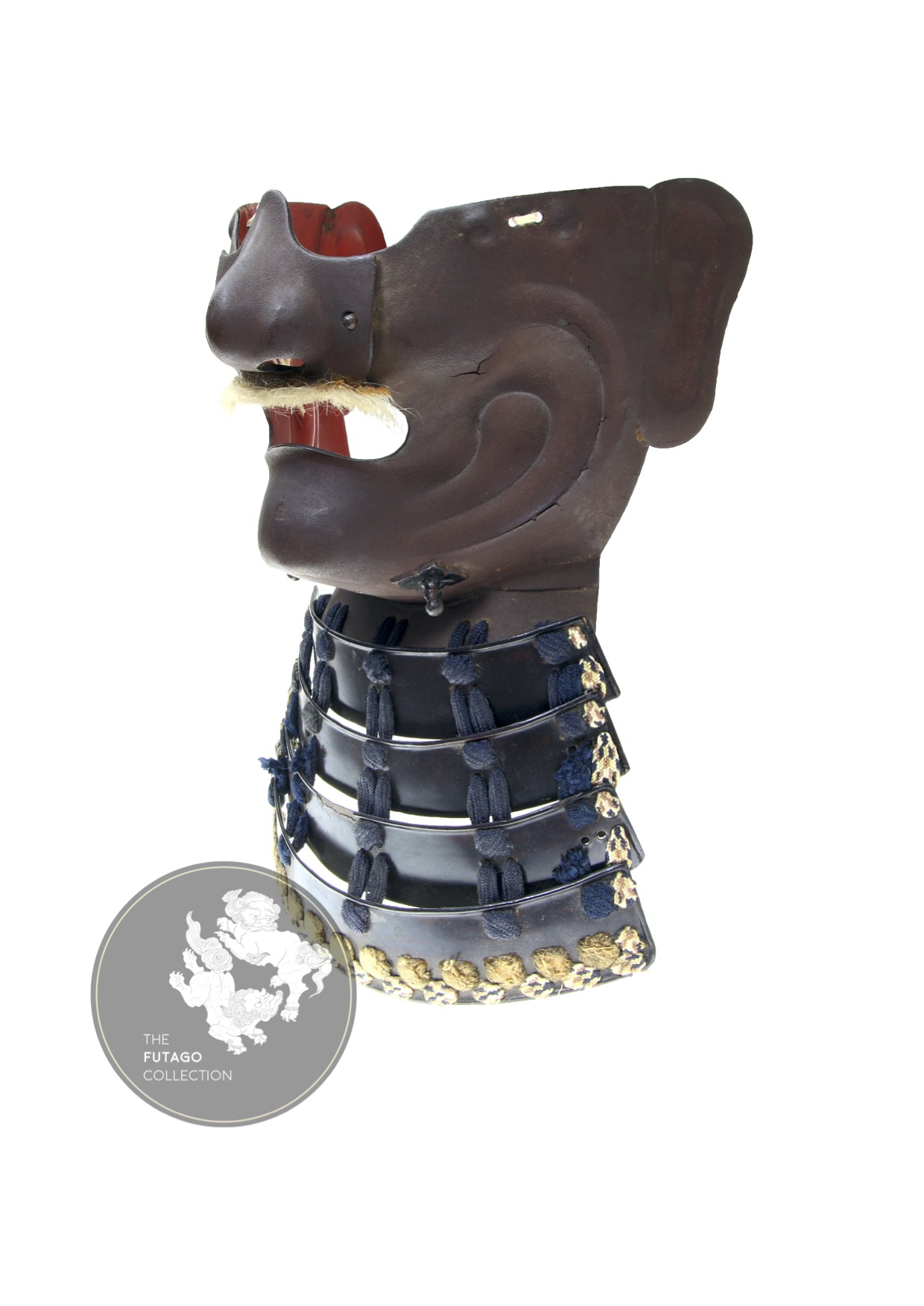
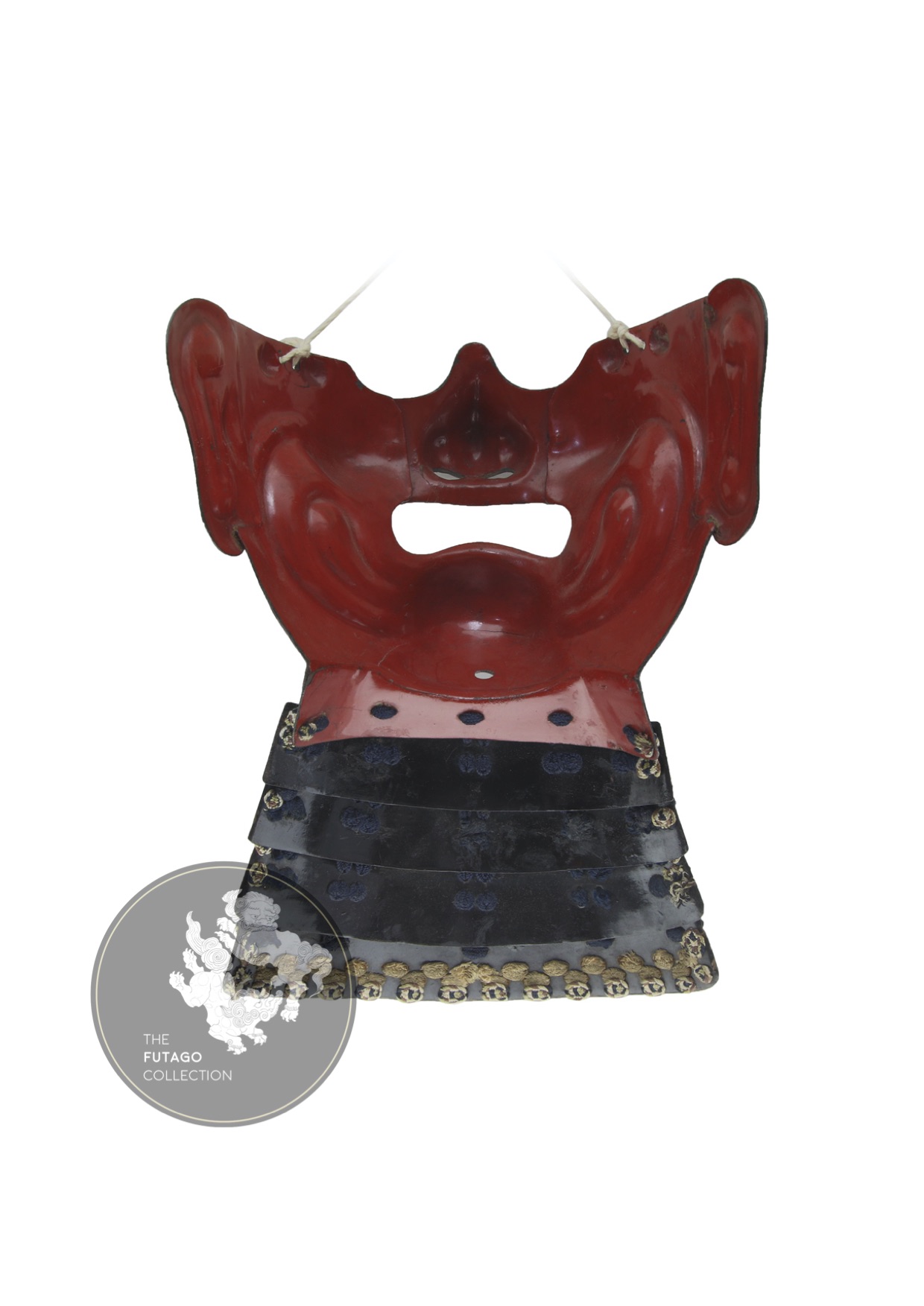
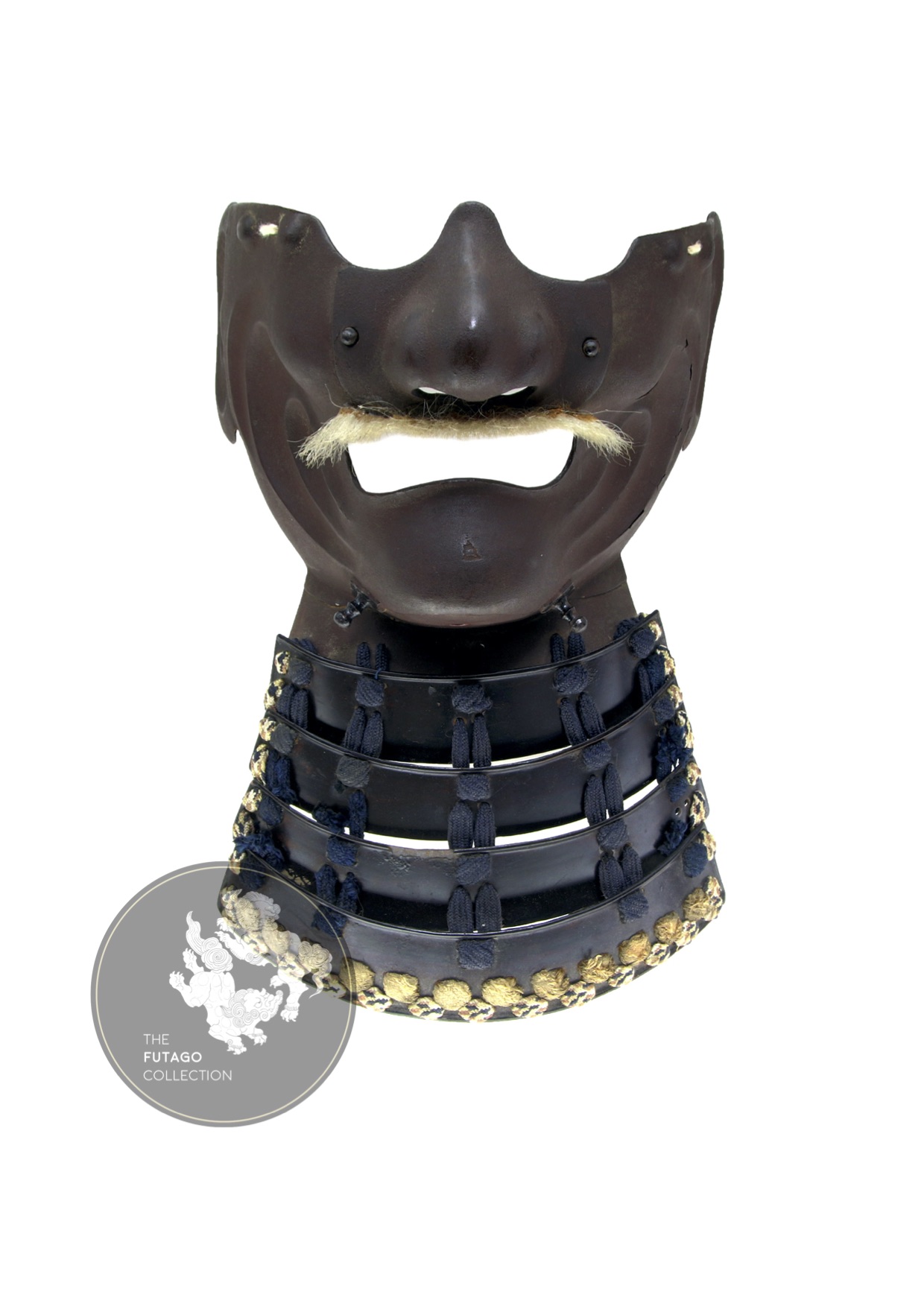
The russet-brown lacquered iron menpo with a round-shaped nose and an applied mustache of animal-hair is fitted with a five-lame Yodarekake. Its interior is lacquered in red.
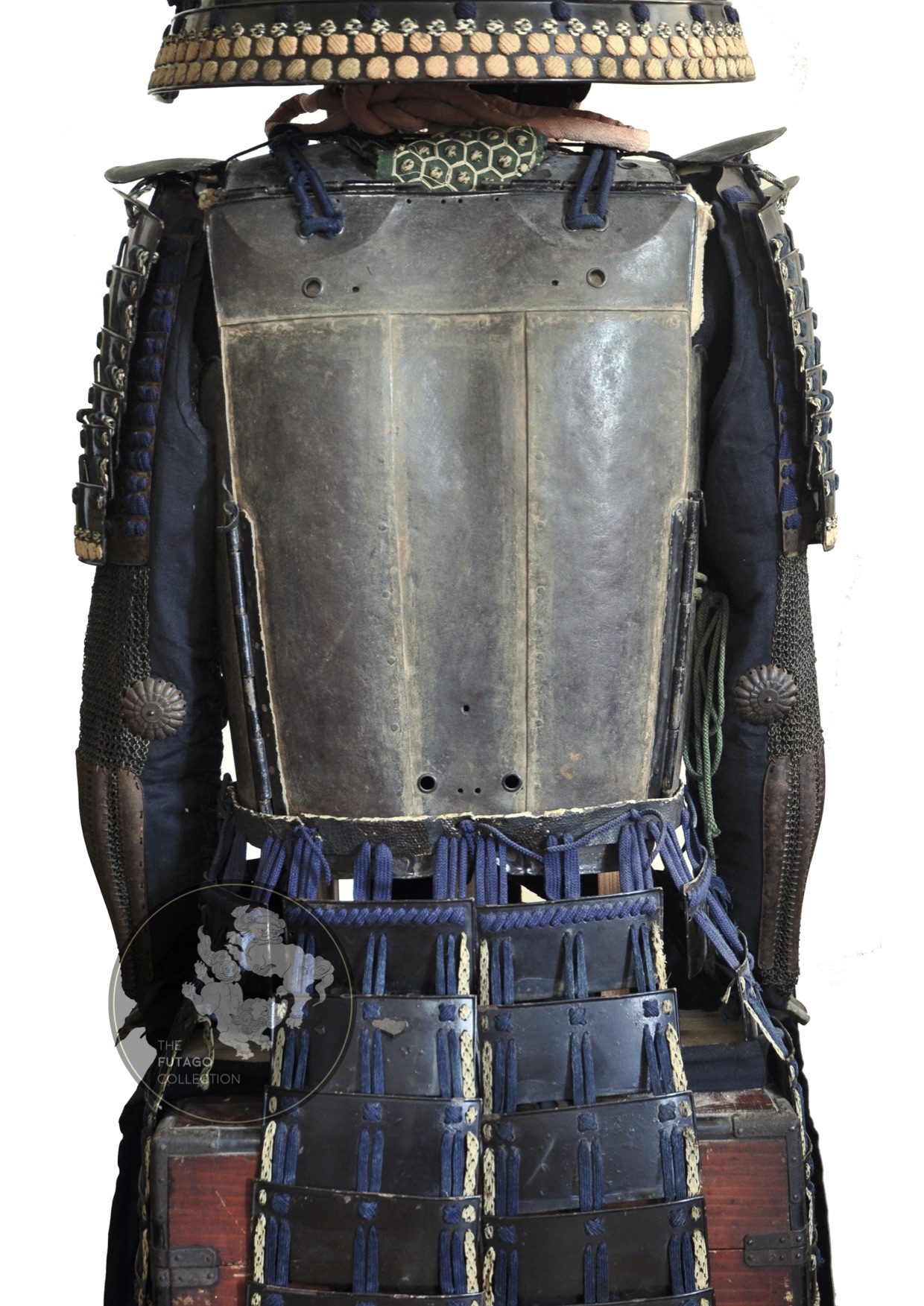
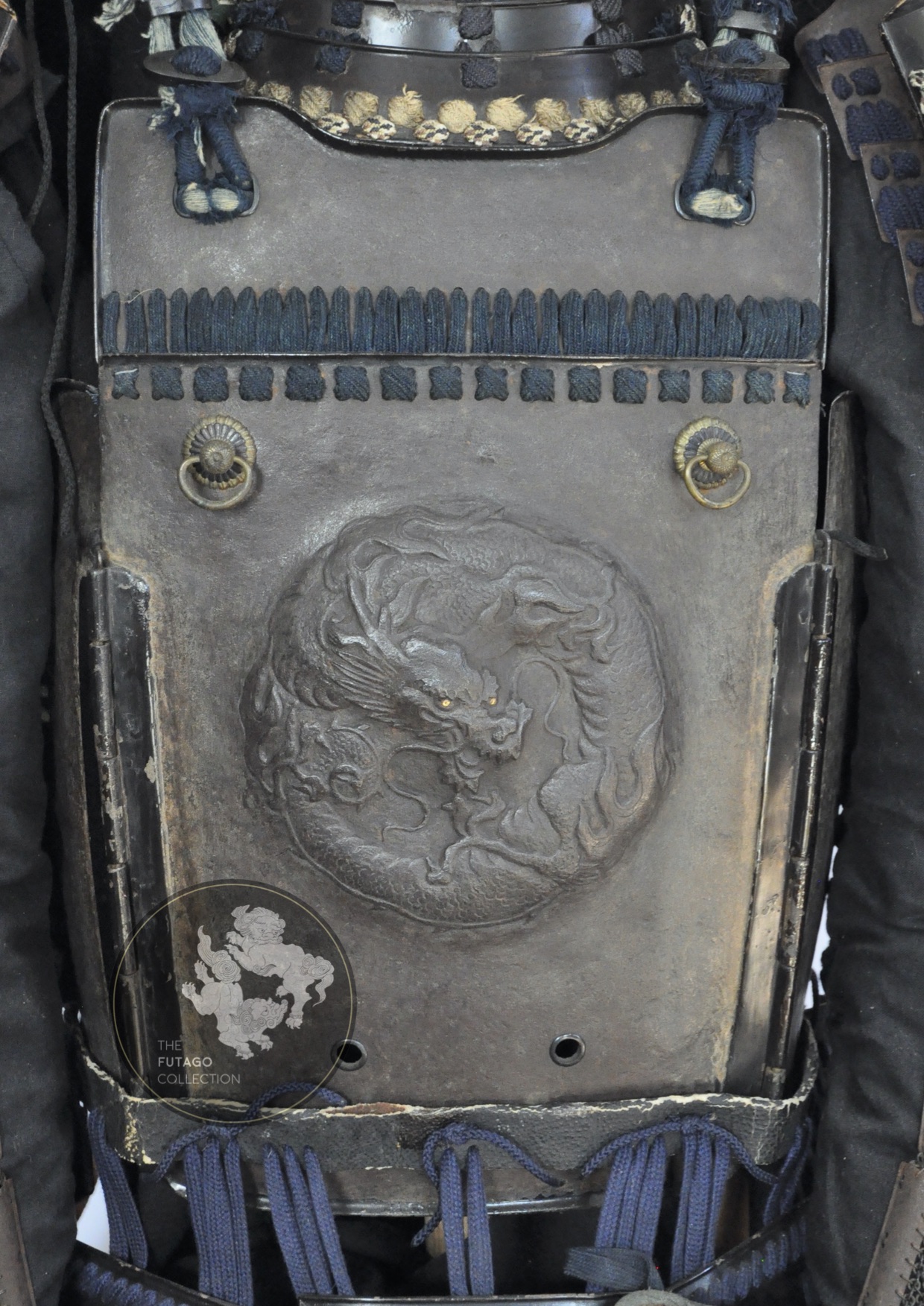
The Gomai dō (cuirass made of five hinged plates) is an outstanding authentic example for a Mid-Edo iron Uchidashi type decorated with an embossed dragon with golden highlighted eyes on the front plate. It is fitted with seven sections of a five lame black lacquered iron Kusazuri laced in dark blue.
Uchidashi (Repoussage) is a technique that involves a hammer and a punch defining a form in a way that retains the thickness into a flat metal sheet from the front side. This technique is presented in many different cultures that worked with iron. The decoration and different designs are obtained by hammering out a form from a flat iron plate. After the form is defined, the details are added using a chisel to refine. The uchidashi technique is broadly applied to Armors from the Myochin School (Miyōchin Ki). This technique became more and more frequent during the Edo Period from the late 17th Century to the mid 19th Century.
 THE FUTAGO COLLECTION